
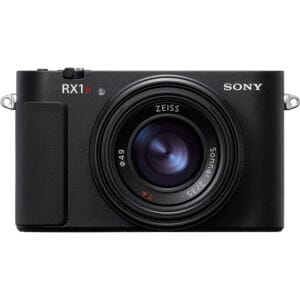
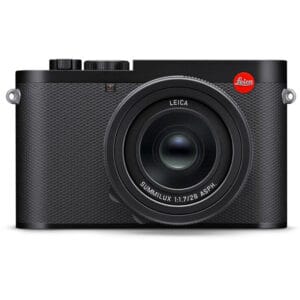
Sony RX1R III vs. Leica Q3: Which Premium Compact Is Worth Your Money?
| Category | Sony RX1R III | Leica Q3 |
|---|---|---|
| Build & Ergonomics | ★★★★★ 4.5 | ★★★★☆ 4 |
| Lens & Optical Versatility | ★★★☆☆ 3 | ★★★★★ 4.5 |
| Photo Performance | ★★★★★ 4.5 | ★★★★☆ 4 |
| Video Capabilities | ★★★★☆ 3.5 | ★★★★☆ 4 |
| Connectivity & Workflow | ★★★★☆ 4 | ★★★☆☆ 3 |
| Battery Life | ★★★★☆ 3.5 | ★★★★☆ 4 |
| Value for Money | ★★★★☆ 3.5 | ★★★☆☆ 3 |
| Overall | ★★★★☆ 3.8 | ★★★★☆ 3.8 |
A side-by-side verdict after owning both cameras and shooting them on real client work, family events, and daily carry for over 30 days each.
Introduction: Why This Comparison Exists
I’m a professional photographer with over 26 years of experience shooting weddings, sports, commercial work, and portraits in Kalispell, Montana. I’ve been embedded in the Sony ecosystem for more than a decade, and my workhorse cameras—the Sony A1 II and A7CR—go with me to every paid job. So when I tell you I owned both the Sony RX1R III and the Leica Q3 simultaneously, tested them on real shoots, and ultimately sold one of them, that recommendation carries the weight of professional livelihood behind it.
This isn’t a spec-sheet showdown you can get anywhere. I lived with the Leica Q3 for several months and the Sony RX1R III for a dedicated 30-day daily-carry challenge, shooting both at car shows, soccer games, weekend getaways, and even alongside my professional kit. After all of that, I sold the Leica Q3 and kept the Sony RX1R III. In this article, I’ll walk you through exactly why, where each camera excels, where each falls short, and which one deserves your money depending on how you actually shoot.
At a Glance: Key Differences
1. The Sony RX1R III is roughly 245 g lighter and significantly more compact (113 × 68 × 88 mm vs. 130 × 80 × 93 mm), making it a true pocket-adjacent daily carry.
2. The Leica Q3 offers a wider, faster lens (28 mm f/1.7) compared to the Sony’s 35 mm f/2, plus built-in optical image stabilization and macro capability down to 17 cm.
3. Sony’s autofocus at native 35 mm is noticeably faster and more reliable for tracking subjects; however, its AF degrades when using the digital crop to 50 mm or 70 mm equivalents.
4. The Q3 commands roughly $900 more at retail (~$5,995 vs. ~$5,100) while delivering a less responsive shooting experience for action and fast-paced family moments.
5. Both cameras share similar 60+ MP full-frame sensors, but the Sony’s BIONZ XR processor and 693 phase-detection AF points give it a meaningful edge in real-world autofocus speed and keeper rate.
Specifications at a Glance
| Specification | Sony RX1R III | Leica Q3 |
| Sensor Resolution | 61.0 MP full-frame BSI CMOS | 60.3 MP full-frame BSI CMOS |
| Lens | Zeiss Sonnar T* 35 mm f/2 (fixed) | Summilux 28 mm f/1.7 ASPH (fixed) |
| Autofocus Points | 693 phase-detect + contrast | Hybrid (phase + contrast + DFD + AI) |
| Continuous Shooting | Up to 5 fps (mech.) | Up to 15 fps (electronic) |
| ISO Range | 100–32,000 (exp. 50–102,400) | 50–100,000 |
| In-Body / Lens Stabilization | None (electronic IS in video only) | Optical IS (lens-based) |
| Video Max | 4K 30p 10-bit 4:2:2 internal | 8K 30p / 4K 60p 10-bit 4:2:2 |
| Battery Life (CIPA) | ~270 shots (EVF) / ~300 (LCD) | ~350 shots |
| Weight (with battery) | 498 g | 743 g |
| Price (US MSRP, 2025) | ~$5,100 | ~$5,995 |
Design, Build, and Daily Carry
Let me put it plainly: the Sony RX1R III changed the way I carry a camera. For years, I’ve hauled an A7CR in my bag as a personal-use body, but the reality is that a camera in a bag is a camera you don’t use. The RX1R III is small enough to hang around my neck while driving, set on a car seat without it tipping over, and carry into a grocery store without drawing a single glance. At a car show a couple of weeks ago, there were several guys with Sony A7 IIIs and assorted lenses talking to each other about gear. Nobody noticed I was shooting with a technically superior camera. I loved that.
The Leica Q3, by contrast, is beautiful—genuinely a piece of industrial art—but it’s not small. At 743 g with the battery, it’s nearly 50% heavier than the Sony, and its dimensions put it closer to a compact mirrorless body than a true point-and-shoot. The Q3’s hand grip with wireless charging base adds even more bulk. During a long weekend in Coeur d’Alene, Idaho with my wife, the Q3 felt more like carrying a second work camera than an escape from work cameras. The Sony, on the other hand, disappears into your routine.
Image Quality and Sensor Performance
Both cameras pack 60+ megapixel full-frame sensors, and honestly, the raw image quality from either one is stunning. The Sony’s 61 MP Exmor R sensor with BIONZ XR processing delivers up to 15 stops of dynamic range in S-Log3 and produces exceptionally clean files through ISO 6400. Above ISO 12,800, noise becomes visible in shadow areas but remains manageable in Lightroom with modern noise reduction. For a recent indoor basketball game I shot alongside my A1 II, I grabbed the RX1R III during warm-ups and pushed it to ISO 10,000. The files held up remarkably well—not A1 II territory, but more than acceptable for social media and web delivery.
The Leica Q3 has its own sensor magic. Leica’s color science is distinctly different—warmer, with a rendering that many photographers describe as more “organic.” The Q3’s built-in Leica Looks color profiles are genuinely appealing, and I found myself doing less color correction on Q3 files than on Sony RAW files, which tend to need a bit more work in post to achieve that same warmth. However, the Q3 tops out at about 14 stops of dynamic range compared to the Sony’s 15, and I noticed more shadow noise above ISO 8,000 on the Leica.
One workflow note: my Lightroom presets, which I’ve built over years for Sony RAW files, didn’t translate well to the Leica’s DNG files. The color response is different enough that I had to rethink my editing approach entirely. If you’re deep in a Sony editing workflow, switching to the Q3 means rebuilding presets—a hidden time cost that nobody talks about.
Lens Performance: 35 mm f/2 vs. 28 mm f/1.7
This is where the two cameras diverge most meaningfully. The Leica’s Summilux 28 mm f/1.7 ASPH is a modern optical masterpiece. It’s wider, faster, includes optical stabilization, and can focus as close as 17 cm in macro mode. If you want environmental portraits, street scenes with context, or any kind of close-up work, the Q3’s lens is objectively more versatile.
The Sony’s Zeiss Sonnar T* 35 mm f/2 is the camera’s Achilles’ heel—and this is coming from someone who kept the camera. This is a lens design that’s over 10 years old. It’s sharp, the Zeiss rendering is lovely, and 35 mm is arguably the most versatile focal length for daily shooting. But the lens is slow to focus compared to modern G Master glass, and when paired with the camera’s digital crop feature (which simulates 50 mm and 70 mm), autofocus performance degrades noticeably. More on that in the autofocus section.
Both cameras offer digital crop modes. The Q3 provides frame lines at 28, 35, 50, 75, and 90 mm equivalents—a wider range thanks to its higher starting resolution at the wide end. The Sony crops from 35 mm to 50 mm and 70 mm. In both cases, you’re losing resolution as you crop, but the Q3’s Triple Resolution Technology (60/36/18 MP modes using the full sensor area) is a clever implementation that the Sony lacks.
Autofocus: The Decisive Difference
If you photograph anything that moves—kids, pets, sports, events—this section matters more than any other. At native 35 mm in single-shot AF, both cameras are fast and accurate. But switch to continuous AF and start tracking a moving subject, and the gap opens up immediately.
During my 30-day test, I photographed my daughter on a swing set using continuous AF on both cameras. She was facing me the whole time, swinging back and forth—a straightforward tracking scenario. The Sony RX1R III struggled. Out of a burst of roughly 15 frames, maybe 9–10 were critically sharp. I went back to the same location with the A7CR and the 35 mm f/1.4 G Master, and the A7CR nailed nearly every frame. The RX1R III’s older lens simply can’t keep up with the demands of continuous autofocus the way modern G Master glass can.
The problem gets worse when you engage the digital crop. At the simulated 50 mm or 70 mm view, the camera appears to crop at the sensor level, reducing the effective AF coverage area. At my son’s soccer game, I tried tracking players running toward me using the 70 mm crop, and the hit rate dropped to maybe 50–60%. At native 35 mm, it was closer to 70–75% in continuous AF. For comparison, my A1 II with a G Master telephoto would be in the high 90s for this kind of scenario.
The Leica Q3’s autofocus, while improved over the Q2, is still not in the same league as Sony’s system for tracking. Leica’s hybrid AF uses phase detection, contrast detection, depth-from-defocus, and AI subject recognition, and it works well enough for street photography and deliberate portraits. But during a fast-moving family moment—a toddler bolting across a room, a dog sprinting in the yard—the Q3 hunted more than the Sony did. Neither camera is a sports machine, but for reactive, grab-the-moment shooting, the Sony’s 693 phase-detection points give it a real edge.
Video Capabilities
On paper, the Leica Q3 wins the video spec war handily: it shoots 8K at 30p, 4K at 60p with 10-bit 4:2:2, and can even output ProRes HQ in Full HD. The Sony tops out at 4K 30p 10-bit 4:2:2 internally, with Full HD at 120 fps for slow motion. If video is a primary use case, the Q3 is the more capable camera on specs alone.
In practice, however, I found that neither camera is a serious video tool for professional work. For a YouTube shoot where I needed quick turnaround—a talking-head segment while walking through town—I reached for the RX1R III because it’s lighter and its electronic stabilization in video mode is adequate for handheld walking shots. But both cameras lack in-body optical stabilization, both overheat during extended recording in warm conditions, and neither replaces a proper mirrorless body with unlimited recording time and professional audio inputs. The Sony’s 3.5 mm mic input is a nice touch, but it’s a marginal advantage.
For casual video—quick clips for social media, behind-the-scenes content—either camera is fine. For anything more demanding, you’re better off with a dedicated video body.
Ergonomics, Controls, and User Experience
If you’re coming from modern Sony cameras, the RX1R III will feel immediately familiar. The menu system, button layout, and general operating logic mirror what you already know from the A7 series. I was productive with this camera within minutes of turning it on.
The Leica Q3 is a different philosophy entirely—and that’s by design. Aperture is controlled via a ring on the lens. Shutter speed lives on a physical dial on top of the body. ISO requires pressing a button and rotating a wheel. Coming from Sony, where I can adjust all three exposure variables without removing my eye from the viewfinder, the Q3 forced me to slow down. At first, that slowdown was pure frustration. During my weekend in Coeur d’Alene, I missed moments because I was fighting the camera’s controls instead of composing the shot.
Over time, though, I began to appreciate the deliberateness the Q3 demands. Leica designed this camera to make you think before you shoot, and once I stopped treating it like a Sony, I started getting images I was genuinely proud of. But here’s the honest truth: when my son scored a goal at his soccer game and I had three seconds to react, I wanted the Sony. When I was walking through a quiet neighborhood composing thoughtful street shots, I wanted the Leica. The question is which scenario describes your photography more often.
Battery Life and Storage Workflow
The Sony RX1R III uses the older NP-FW50 battery, rated at approximately 270 shots via EVF or 300 via the rear LCD. During a 10-hour wedding day where I carried the RX1R III as a personal camera alongside my A1 II professional kit, I shot around 180 frames on the Sony and ended the day at roughly 35% battery. That’s livable for a secondary camera, but if this were your only body, you’d need at least two spare batteries for an all-day event. USB-C power delivery means you can top off from a power bank, which I did regularly during my 30-day challenge.
The Leica Q3’s BP-SCL6 battery is rated at about 350 shots—roughly 30% more endurance. In practice, I found the Q3 lasted noticeably longer during extended shooting sessions, and its optional wireless charging grip is a nice convenience feature (though it adds bulk and covers the SD card slot, which introduces its own frustrations).
Speaking of the SD card slot: on the Q3, attaching anything to the bottom of the camera—including the wireless charging grip—blocks access to the card. And the Q3’s current firmware doesn’t support file transfer over USB-C, only charging. So you’re either removing the grip to swap cards or transferring wirelessly through the Leica FOTOS app to your phone, then importing to Lightroom. It’s a clunky workflow compared to the Sony, which supports standard USB-C data transfer.
Who Should Buy Which Camera?
Buy the Sony RX1R III if: you already own a professional workhorse camera and want the most compact, high-performance daily carry possible. If you’re a Sony shooter, the familiarity of the menu system and RAW workflow is a massive advantage. If you photograph fast-moving subjects—even occasionally—the Sony’s autofocus is meaningfully better. And if the $900 price difference matters to your budget, the Sony delivers more practical value per dollar.
Buy the Leica Q3 if: you’re looking for a camera that fundamentally changes how you approach photography. The Q3’s deliberate controls, wider 28 mm lens, optical stabilization, superior battery life, and 8K video capability make it the more versatile creative tool—if you’re willing to slow down and learn its rhythms. If you value Leica’s color science and the intangible “experience” of shooting a Leica, the Q3 delivers something the Sony simply doesn’t.
Skip both if: size isn’t your priority. An A7CR with a compact prime lens does 90% of what either camera offers for about half the price. These are luxury cameras for photographers who already have their professional needs covered.
Quick Reference: Feature Comparison
| Feature | Winner | Margin |
| Portability / Size | Sony RX1R III | 245 g lighter, substantially smaller footprint |
| Lens Versatility | Leica Q3 | Wider (28 mm), faster (f/1.7), OIS, macro to 17 cm |
| Autofocus Speed & Tracking | Sony RX1R III | 693 PD-AF points; 15–20% higher keeper rate in C-AF |
| Image Quality (Color Science) | Tie / Preference | Leica warmer out-of-camera; Sony more flexible in post |
| Video Specs | Leica Q3 | 8K 30p + 4K 60p vs. Sony’s 4K 30p max |
| Battery Life | Leica Q3 | ~350 vs. ~270 shots (CIPA); ~30% advantage |
| Ergonomics for Sony Shooters | Sony RX1R III | Identical menu/button logic to A7 series |
| Digital Crop Range | Leica Q3 | 28/35/50/75/90 mm vs. Sony’s 35/50/70 mm |
| File Transfer Workflow | Sony RX1R III | USB-C data transfer vs. Q3’s card-only or wireless |
| Price (US MSRP) | Sony RX1R III | $5,100 vs. $5,995 — ~$900 savings |
You can see all of my favorite images from the RX1R III daily carry challenge here.
Our Verdict
It's a Tie
I sold the Leica Q3 and kept the Sony RX1R III. After owning both cameras and shooting them extensively, the Sony won because it solved a problem I didn’t know I had: it made photography fun again without fighting me along the way. The Leica Q3 is a beautiful camera that produces gorgeous images. I genuinely enjoyed it once I stopped expecting it to behave like a Sony. But the friction was real—the slower controls, the clunky file transfer, the heavier body that felt more like a second work camera than an escape from work cameras. The Q3 demands that you adapt to it, and for some photographers, that’s exactly the point. The Sony RX1R III, by contrast, slipped into my life effortlessly. It’s familiar, it’s fast, it’s absurdly compact for a 61 MP full-frame camera, and it reignited my desire to carry a camera every single day. Is it worth $5,100? Objectively, probably not—an A7CR does most of the same things for less money. But the RX1R III’s magic is in its size. It’s the camera you actually carry, which means it’s the camera you actually use, which means it’s the camera that actually makes your photos.
It’s not perfect, but it’s perfect enough. And for me, that’s worth more than perfection you leave in the bag.
Frequently Asked Questions
Can the Sony RX1R III replace a mirrorless camera for professional work?
Is the Leica Q3’s autofocus good enough for photographing kids and pets?
Which camera has better image quality?
Why is the RX1R III so expensive for a fixed-lens camera?
Can I use the digital crop on either camera as a substitute for carrying extra lenses?
I’m a Sony shooter. Will I need to change my Lightroom workflow for the Leica Q3?
Which camera is better for street photography?
