
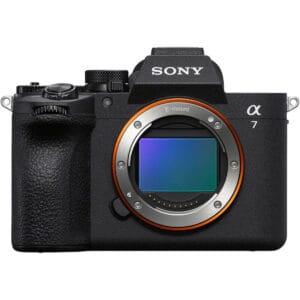
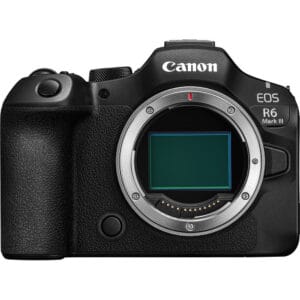
Sony A7 V vs Canon R6 III: Which Camera Should You Buy?
| Category | Sony a7 V | Canon EOS R6 Mark III |
|---|---|---|
| Build & Ergonomics | ★★★★★ 4.5 | ★★★★★ 5 |
| Lens Ecosystem | ★★★★★ 5 | ★★★★☆ 3.5 |
| Photo Performance | ★★★★☆ 4 | ★★★★☆ 4 |
| Video Capabilities | ★★★★☆ 4 | ★★★★★ 4.5 |
| Memory & Connectivity | ★★★★★ 4.5 | ★★★★☆ 4 |
| Battery Life | ★★★★★ 4.5 | ★★★★☆ 4 |
| Value & Ecosystem | ★★★★★ 4.5 | ★★★★★ 4.5 |
| Overall | ★★★★☆ 4.4 | ★★★★☆ 4.2 |
A Professional Photographer’s 30-Day Real-World Comparison
Introduction
Choosing between Sony and Canon in the mirrorless full-frame camera market has never been more difficult. Both manufacturers have refined their offerings to the point where either system can deliver exceptional results for professional and enthusiast photographers alike. After spending over a decade in the Sony ecosystem, I recently had the opportunity to spend 30 days shooting with the Canon EOS R6 III alongside my newly acquired Sony A7 V.
This wasn’t a controlled laboratory test with charts and clinical measurements. Instead, I used both cameras in real-world scenarios: high school basketball games, product photography, holiday gatherings, YouTube thumbnail creation, and even multi-day live streaming events. My goal was to understand how these cameras actually perform when the pressure is on and clients are waiting.
What follows is a comprehensive breakdown of my experience with both cameras, covering everything from sensor technology and autofocus performance to ergonomics and battery life. Whether you’re deciding between these two specific models or simply trying to choose between the Sony and Canon ecosystems, this comparison should give you the practical insights you need to make an informed decision.
Gear Mentioned:
- Canon R6 III Body: https://jerad.link/canonr6iii
- Sony a7V Body: https://jerad.link/sonya7v
- Canon RF 24-70mm f/2.8 IS: https://jerad.link/canonrf2470lis
- Sony FE 24-70mm f/2.8 GM: https://jerad.link/sonyfe2470gmii
- SD Cards I Use: https://jerad.link/progradev90sd128gb
- CFexpress Type B Cards: https://jerad.link/pgd512cfxb
- CFextpress Type A Cards: https://jerad.link/sd480cfa
Sample Image Galleries
Specifications at a Glance
| Specification | Sony A7 V | Canon EOS R6 III |
| Resolution | 33 Megapixels | 32.5 Megapixels |
| Sensor Type | Partially Stacked Full-Frame | Full-Frame Dual Pixel CMOS AF II |
| Max Burst (Electronic) | 30 fps | 40 fps |
| Max Burst (Mechanical) | 10 fps | 12 fps |
| RAW Bit Depth | 14-bit | 12-bit |
| Max Video Resolution | 4K 120p | 7K RAW (Open Gate) |
| IBIS Rating | 7.5 stops | 8.5 stops |
| Card Slots | SD + SD/CFexpress Type A | SD + SD/CFexpress Type B |
| Special Features | Dedicated AI Chip, Pre-Capture, Flip/Tilt Screen | 7K RAW, Open Gate, Live Streaming Mode |
Sensor Technology and Image Quality
Both cameras represent the current state of the art in full-frame sensor technology, though they take notably different approaches to achieving their respective goals.
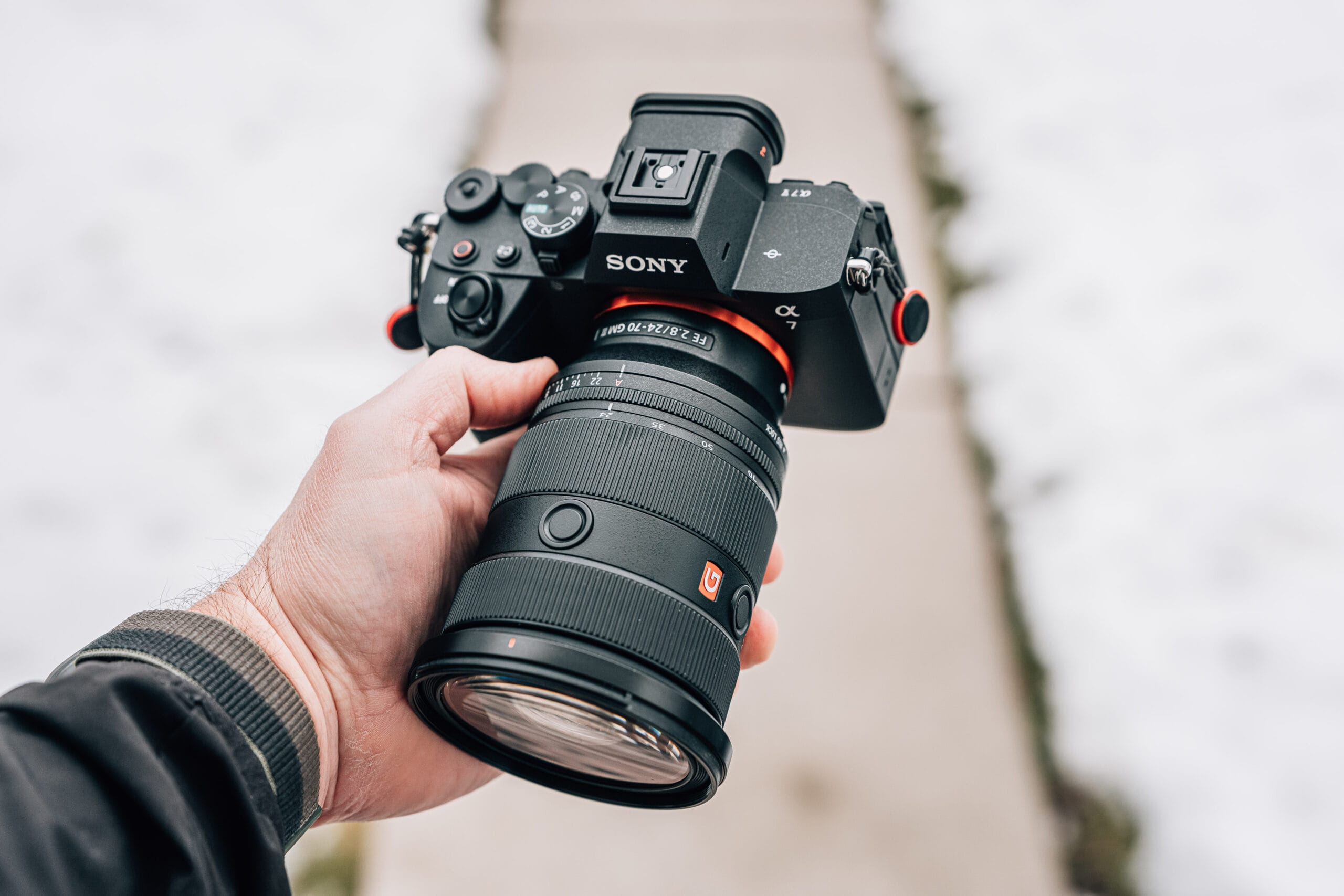
Sony A7 V: The Partially Stacked Advantage
The Sony A7 V features a 33-megapixel partially stacked full-frame sensor, which represents a significant technological advancement over traditional sensor designs. The “partially stacked” architecture places some of the sensor’s processing circuitry beneath the photodiodes, enabling faster data readout without sacrificing image quality or resolution.
This design pays dividends in several key areas. The camera can shoot 14-bit RAW files at up to 30 frames per second in electronic shutter mode while maintaining improved rolling shutter performance compared to previous generations. For photographers who frequently shoot fast-moving subjects, this means fewer distortion artifacts when panning or capturing motion.
The higher 33-megapixel resolution also provides meaningful advantages for cropping flexibility and large print output, giving photographers more latitude in post-production without sacrificing detail.
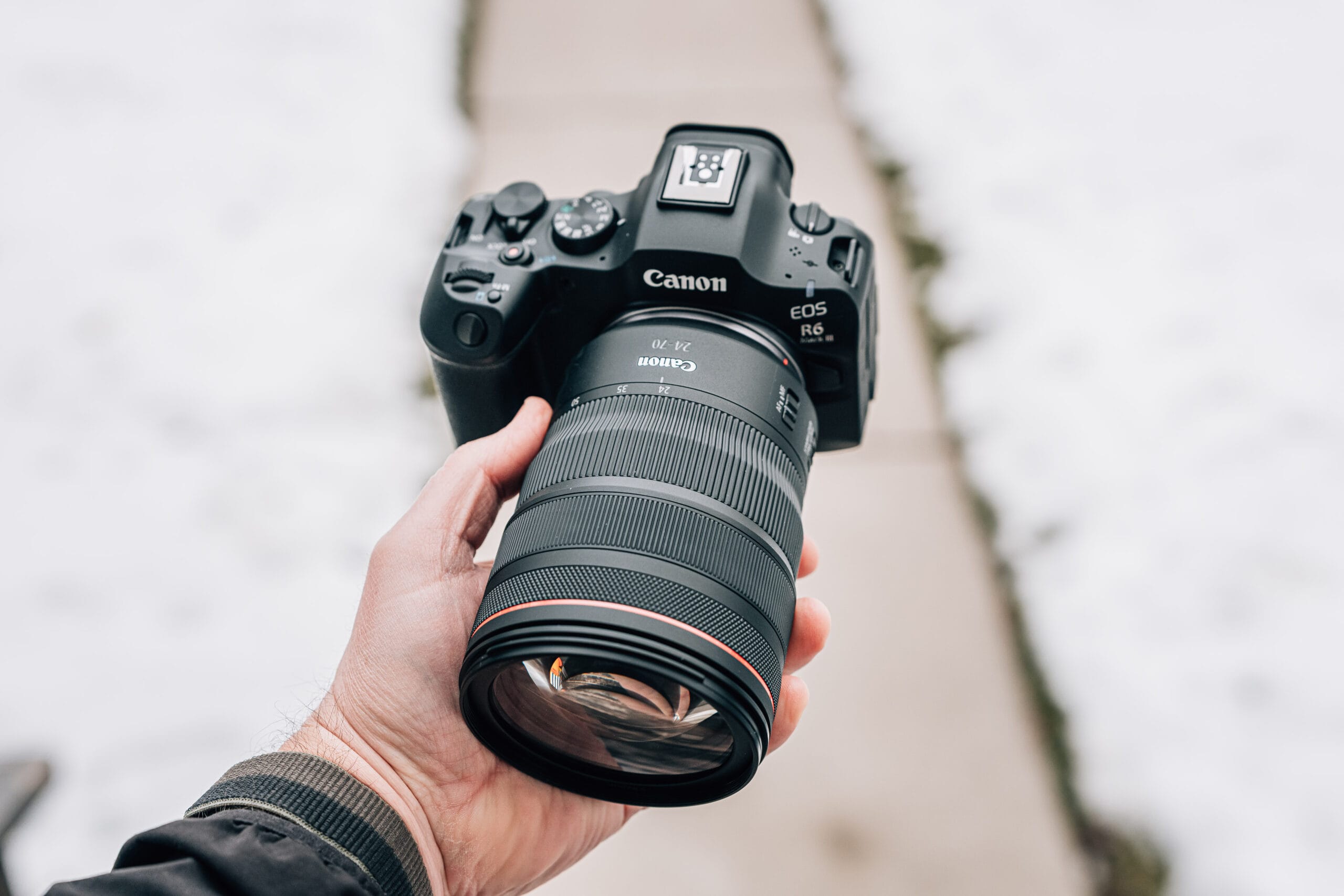
Canon EOS R6 III: Speed-Focused Design
The Canon EOS R6 III takes a different approach with its 32.5-megapixel Dual Pixel CMOS AF II sensor. While the resolution is lower than the Sony, Canon has optimized this sensor for raw speed and video performance.
The camera can achieve an impressive 40 frames per second in electronic shutter mode, outpacing the Sony by 10 fps. It also offers 12 fps with the mechanical shutter, giving action photographers flexibility in choosing their shooting mode based on the situation.
However, the trade-off for this speed advantage is more pronounced rolling shutter in electronic shutter mode compared to the Sony. Additionally, the Canon shoots 12-bit RAW files rather than the 14-bit files the Sony produces, which may provide slightly less dynamic range and color gradation, though this difference is often difficult to perceive in real-world shooting.
Real-World Rolling Shutter Considerations
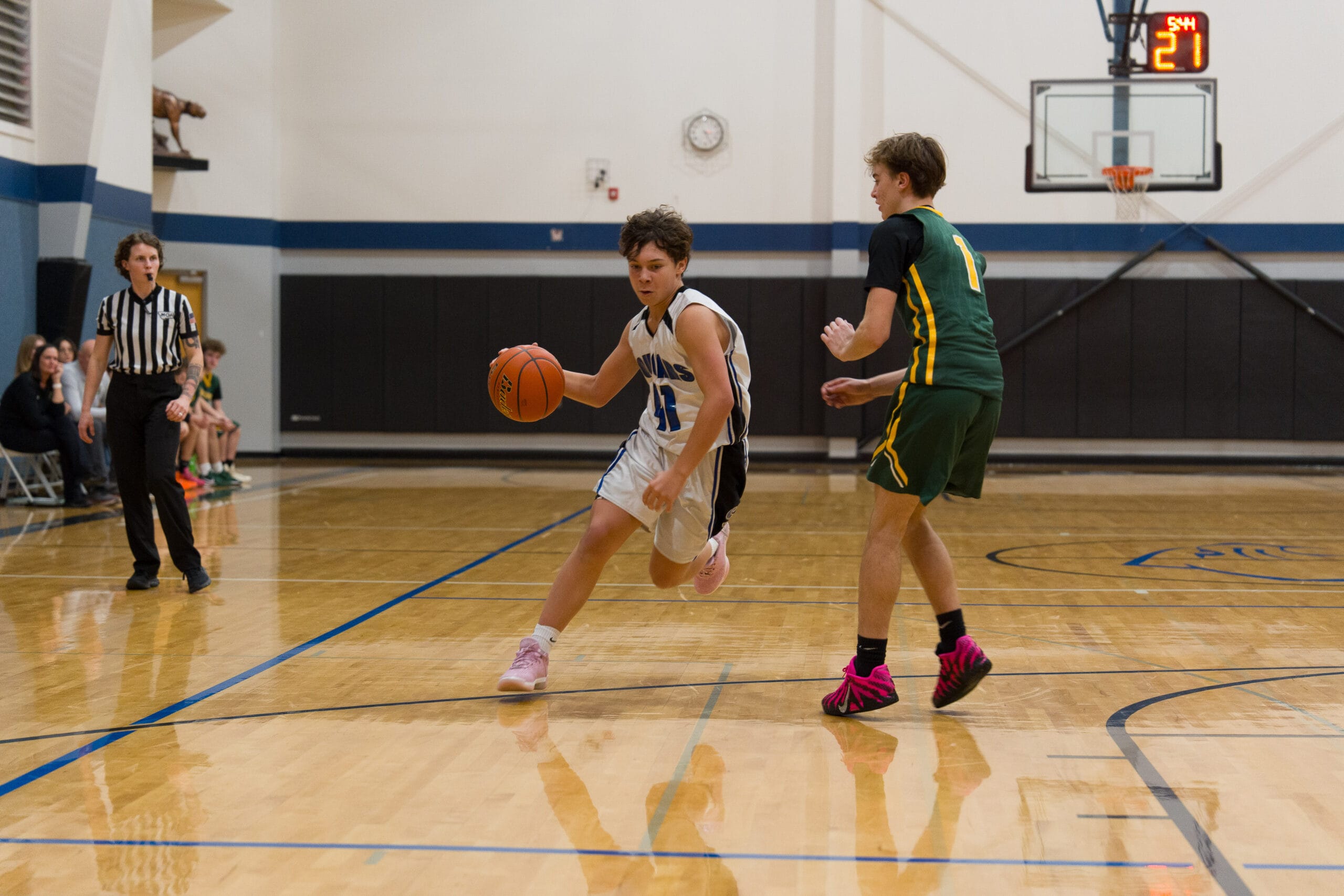
Rolling shutter has traditionally been a concern primarily for video shooters, but it becomes increasingly relevant when shooting stills at 30+ frames per second in electronic shutter mode. During my month with both cameras, I shot high school basketball games and various action scenarios.
In practice, I found the rolling shutter difference to be less of an issue than specifications might suggest. Most photographers won’t be shooting at 40 fps while simultaneously panning rapidly across the frame. Typical use cases, such as waiting for a specific moment during a wedding ceremony or capturing peak action in sports, involve relatively stable framing where rolling shutter is minimal.
Sony has capped their camera at 30 fps specifically because their partially stacked sensor can handle that speed with minimal rolling shutter artifacts. Canon has pushed to 40 fps knowing that most users will employ that speed in situations where rolling shutter won’t be problematic.
Autofocus Performance
Autofocus is arguably the most critical performance metric for modern mirrorless cameras, and both the A7 V and R6 III represent the pinnacle of their respective manufacturer’s AF technology.
Sony’s AI-Powered Approach
The Sony A7 V features a dedicated AI processing chip that works in tandem with the main image processor. This chip powers advanced subject recognition with presets for various subject types including humans, animals, birds, vehicles, and more. The camera can even automatically detect and switch between subject types as they enter the frame.
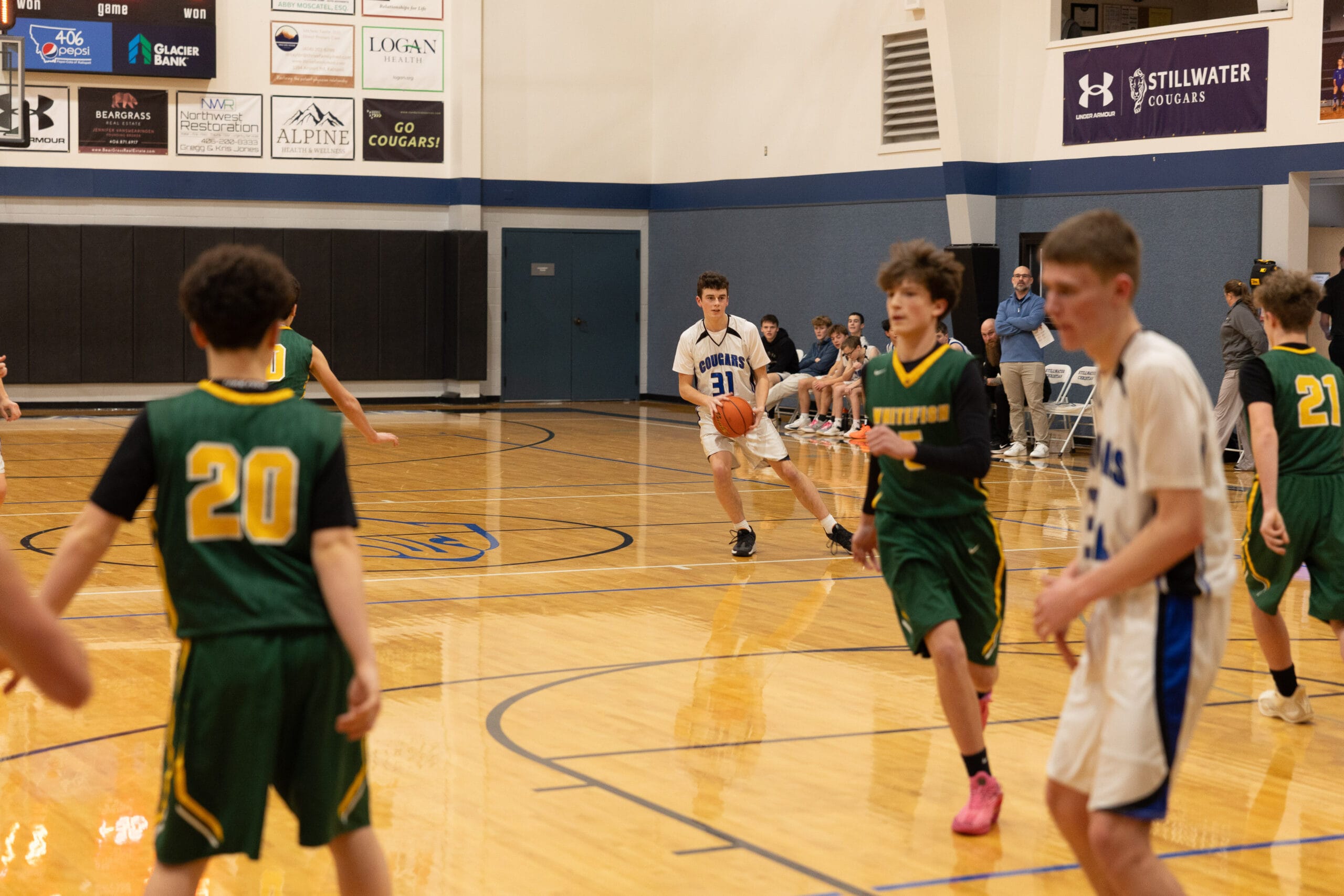
In my testing, the Sony excelled at acquiring and maintaining focus lock on subjects. Once the camera identified my subject, it stayed locked on with impressive tenacity, even as other players or objects moved through the frame. The AI chip appears to provide genuine benefits in complex, cluttered scenes where traditional autofocus systems might become confused.
Canon’s User Interface Advantage
While Canon’s autofocus system lacks the dedicated AI chip found in the Sony, it compensates with an exceptionally intuitive user interface for subject selection. When multiple potential subjects are in the frame, the Canon displays a clear white box around the detected subject with directional arrows indicating that you can use the D-pad to toggle between subjects.
This visual feedback proved invaluable during fast-paced shooting scenarios. During basketball games, I could quickly and confidently select the specific player I wanted to track, knowing exactly what the camera was locked onto. The system is immediately understandable, even for photographers new to the Canon platform.
The Sony offers similar functionality, but its implementation is less obvious. A small green box with a thin line underneath indicates the selected subject, and you can similarly toggle between subjects using the D-pad. However, the visual feedback is subtler and less immediately intuitive. In the heat of a fast-moving event, I found myself second-guessing whether I had selected the correct subject more often than with the Canon.
High-Speed Tracking Comparison
When pushing both cameras to their limits with continuous high-speed shooting, I noticed the Canon seemed to maintain slightly more consistent subject tracking at the highest frame rates. This observation aligns with feedback from other reviewers who specialize in sports and action photography.
That said, both cameras delivered excellent results for my basketball shooting. The differences are marginal enough that either camera would serve a sports photographer well. The choice between them may come down to which user interface you find more intuitive and whether you value Sony’s AI-powered subject recognition or Canon’s more straightforward visual feedback system.
Video Capabilities
Both cameras are positioned as hybrid shooters, capable of delivering professional-quality video alongside their still photography capabilities.
Canon’s 7K Advantage
The Canon EOS R6 III’s headline video feature is its ability to shoot 7K RAW footage in open gate mode. This capability requires a CFexpress Type B card, but those have become increasingly affordable and accessible.
The practical benefits of 7K are twofold. First, it enables the camera to produce oversampled 4K footage, meaning more image data is captured and then scaled down to 4K, resulting in sharper, more detailed video. Second, the additional resolution provides significant cropping headroom in post-production, allowing for reframing, stabilization, and even simulated camera movements without quality loss.
The open gate mode is particularly valuable for cinematographers who need to match footage with higher-end cinema cameras or who want maximum flexibility in post-production. For productions requiring extensive color grading and integration with professional cinema workflows, the 7K RAW capability offers genuine advantages.
Practical 4K Shooting
For the majority of content creators and videographers, 4K is the target output resolution. Both cameras shoot excellent 4K video at 10-bit 4:2:2 color sampling, providing ample data for color grading and post-production flexibility.
In my side-by-side 4K shooting, the quality difference between the cameras was subtle. The most noticeable distinction was in color rendering, with Canon producing its characteristically warm, pleasing color palette compared to Sony’s more neutral, sometimes cooler tones. Many photographers and videographers prefer Canon’s color science, though Sony’s 10-bit 4:2:2 output provides sufficient latitude to adjust colors to taste in post-production.
Unless you specifically need 7K for cropping, matching with cinema cameras, or other specialized workflows, both cameras will serve your 4K production needs equally well.
Ergonomics and Handling
After spending extended time with both cameras, the ergonomic differences became one of the most significant factors in my daily shooting experience.
Canon’s Superior Grip and Control Layout
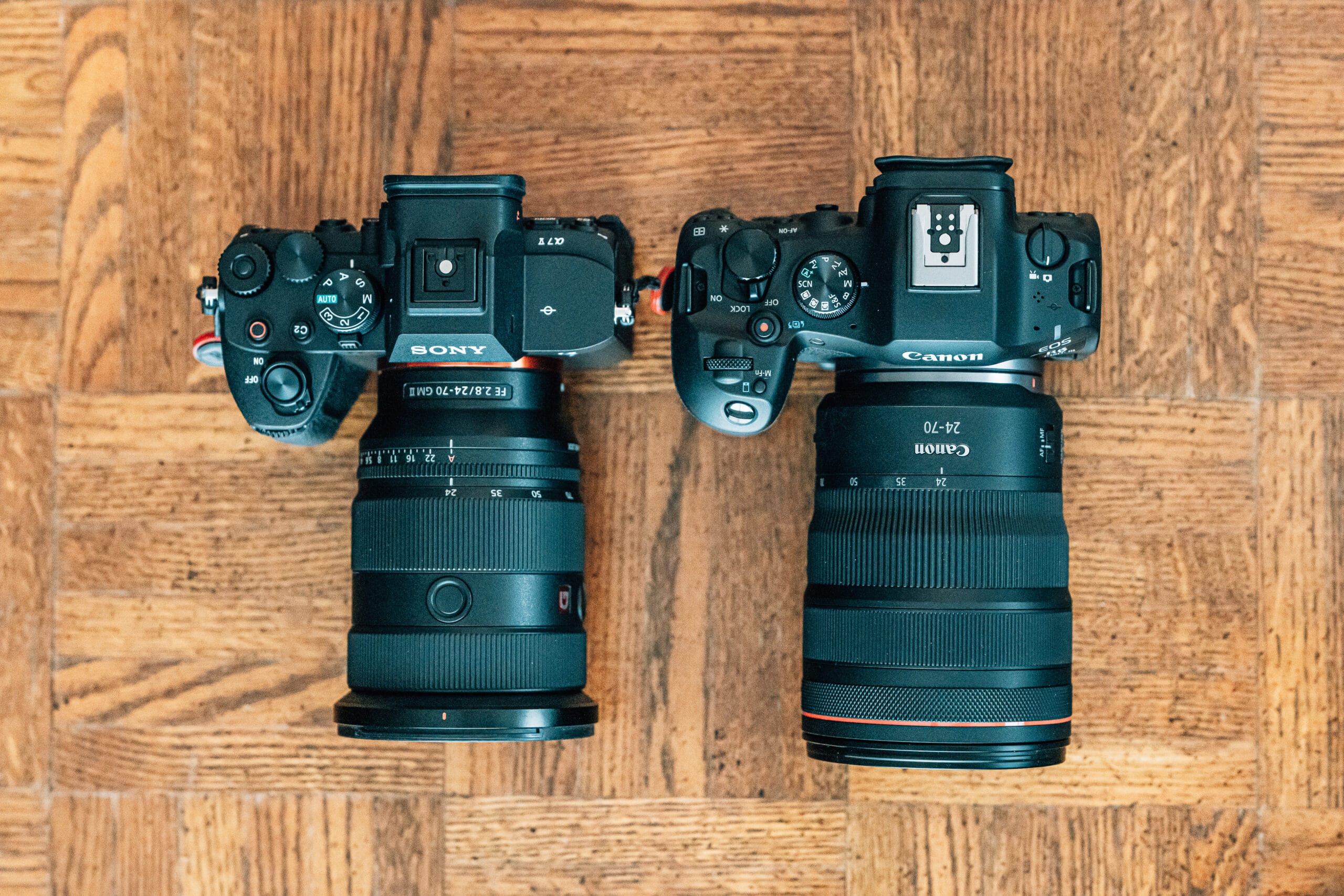
Canon has always excelled at camera ergonomics, and the R6 III continues this tradition. The camera body is slightly larger and chunkier than the A7 V, but this extra size translates directly into improved handling.
The grip depth and angle feel natural and secure, allowing for extended shooting sessions without hand fatigue. More importantly, the control layout enables operation without contorting your hand or losing your grip on the camera.
The D-pad position is particularly well considered. When your hand is in the natural shooting position with your finger on the shutter button, your thumb falls directly onto the D-pad. This means you can move focus points, toggle between subjects, and navigate menus without repositioning your hand or loosening your grip on the camera.
Many of Canon’s higher-end RF lenses also feature a third control ring that can be mapped to ISO or aperture, allowing for exposure adjustments without touching the camera body at all. Having zoom, focus, and exposure control all on the lens keeps your shooting hand firmly planted on the grip.
Sony’s Compact Trade-offs
The Sony A7 V’s more compact body was initially one of the features that attracted me to the platform. However, after shooting extensively with the Canon, I became acutely aware of the ergonomic compromises this compactness requires.
The D-pad on the Sony sits lower on the camera body. To reach it while maintaining your grip on the camera, you must slide your hand down, leaving only a small portion of your palm in contact with the grip and your finger extended up to the shutter button. This creates a less secure hold on the camera, increasing reliance on your left hand for support.
The smaller body also means less real estate for controls, resulting in buttons that are closer together and potentially more difficult to distinguish by feel. While none of these issues are deal-breakers, they add up over a long day of shooting.
Screen Design: Sony’s Innovation
One area where Sony takes a clear lead is the rear screen design. The A7 V features a flip-out and tilt screen, combining the benefits of both articulating screen types. You can flip the screen out to the side for vlogging-style shooting or tilt it up and down for waist-level or overhead shots.
The Canon uses a traditional flip-out articulating screen that rotates out to the side. While this design is proven and works well, it lacks the versatility of Sony’s dual-action screen for photographers who frequently switch between different shooting angles.
Live Streaming Capabilities
An unexpected highlight of my testing period was using both cameras for live streaming events. I had three live streaming sessions during my month with the R6 III, providing valuable insight into each camera’s suitability for this increasingly common use case.
Canon’s Dedicated Streaming Mode
The Canon EOS R6 III features a dedicated live streaming mode that optimizes the camera for extended USB or HDMI output. When enabled, this mode reduces the rear screen brightness to minimal levels and adjusts power management for maximum efficiency.
What impressed me most was the clear visual confirmation that the camera was configured for streaming. The interface makes it obvious that you’re in a specialized mode designed for this purpose, providing peace of mind during important live events.
For content creators who regularly use their camera as a webcam or for live productions, this thoughtful feature demonstrates Canon’s attention to the needs of modern hybrid shooters.
Sony’s Capable but Less Obvious Implementation
The Sony A7 V can certainly handle live streaming duties, supporting both USB and HDMI output with appropriate power management. However, there’s no dedicated streaming mode with the same clear visual feedback as the Canon.
The camera handles extended streaming sessions competently, but the experience feels less tailored to this specific use case. For photographers who only occasionally stream, this won’t matter. For dedicated content creators, Canon’s explicit streaming mode is a welcome refinement.
Battery Life
Battery performance can make or break a shooting experience, particularly for event photographers or content creators who can’t easily stop to swap batteries.
Sony’s Substantial Advantage
In my real-world testing, the Sony A7 V demonstrated notably superior battery life compared to the Canon R6 III. Using the Sony, I shot 432 still images and approximately 8 video clips on a single charge, finishing with 11% battery remaining.
The Canon, by contrast, showed its battery depleting more quickly despite shooting fewer images. While my shooting patterns weren’t identical between the cameras (I used the Canon more deliberately as a loaner unit), the Sony’s battery advantage was apparent throughout the testing period.
Both cameras feature power-saving modes that reduce the rear screen refresh rate before eventually turning the display off, but the Sony simply seems to extract more shooting time from its battery.
Practical Implications
For photographers who shoot extended events or travel without easy access to charging, Sony’s battery advantage is meaningful. A wedding photographer, for example, might appreciate not needing to swap batteries during a ceremony or reception.
Canon shooters should plan to carry additional batteries for all-day shooting sessions. The battery life isn’t poor by any means, just noticeably shorter than what the Sony delivers.
In-Body Image Stabilization
Both cameras feature sophisticated in-body image stabilization (IBIS) systems, though Canon claims a slight advantage in rated performance.
Canon rates the R6 III’s IBIS at 8.5 stops of compensation at the center of the frame, compared to 7.5 stops for the Sony A7 V. This one-stop difference could be meaningful for photographers who frequently shoot handheld in low light or use longer focal lengths without a tripod.
In practice, both systems perform well enough that the difference is difficult to perceive in normal shooting conditions. The real-world impact of that additional stop of stabilization will depend heavily on your shooting style and the specific situations you encounter.
Memory Card Options
Both cameras feature dual card slots, but the implementations differ in ways that might influence your decision based on your existing card investment or workflow requirements.
The Sony A7 V supports either dual SD cards or a combination of one SD card and one CFexpress Type A card. CFexpress Type A cards are the smaller, newer format that Sony has championed, offering high speeds in a compact form factor.
The Canon EOS R6 III supports SD cards and CFexpress Type B cards. Type B cards are larger but more widely available and generally less expensive than their Type A counterparts. For shooting 7K RAW video, a CFexpress Type B card is required.
If you’re already invested in one card format, this could influence your camera choice. If you’re starting fresh, both systems offer paths to high-speed storage, with Canon’s Type B cards being somewhat more economical.
Lens Ecosystem Considerations
No camera comparison would be complete without acknowledging the lens ecosystems that support them.
Sony’s Mature E-Mount System
Sony’s E-mount has been the dominant mirrorless system for years, resulting in an extensive native lens lineup from both Sony and third-party manufacturers. You can find lenses at virtually every price point and focal length, from budget-friendly options to exotic professional glass.
The system’s maturity means you’re unlikely to encounter gaps in lens availability, and the used market offers additional value opportunities for photographers building their kits.
Canon’s Compelling RF Mount Offerings
Canon’s RF mount, while newer, has rapidly developed into a comprehensive professional system. Canon has released several lenses that generate genuine envy from Sony shooters, including the remarkably compact RF 70-200mm f/4L IS USM.
Many RF lenses feature the third control ring I mentioned earlier, allowing photographers to assign frequently-adjusted settings like ISO or aperture to a ring on the lens itself. This thoughtful addition to the lens design philosophy extends the ergonomic advantages of Canon bodies to the entire shooting experience.
Canon has restricted third-party lens manufacturers from producing autofocus RF mount lenses (though this may change), meaning your lens options are currently limited to Canon’s own offerings and manual-focus third-party lenses.
Recommendations: Who Should Choose Which Camera?
Choose the Sony A7 V If You…
The Sony A7 V is the better choice if you prioritize resolution and want the extra cropping flexibility that 33 megapixels provides. The higher megapixel count matters for large print output, extensive cropping, or situations where you might need to extract multiple compositions from a single frame.
Sony’s dedicated AI processing chip provides genuine advantages in complex autofocus scenarios, particularly when subjects are partially obscured or moving through cluttered backgrounds. If you frequently photograph unpredictable subjects in challenging conditions, the AI-powered subject recognition offers meaningful benefits.
The superior battery life makes the A7 V attractive for event photographers, travel shooters, or anyone who needs to maximize shooting time between charges. The flip-out and tilt screen also provides more versatility for photographers who work at varied angles.
Finally, if you’re already invested in Sony’s E-mount ecosystem with lenses and accessories, staying within the system avoids the significant cost and disruption of switching platforms.
Choose the Canon EOS R6 III If You…
The Canon R6 III excels for photographers who prioritize speed and ergonomics. The 40 fps burst rate with deep buffers makes it ideal for sports, wildlife, and action photography where capturing the decisive moment requires rapid-fire shooting capability.
If you value intuitive camera handling and plan to shoot for extended periods, Canon’s superior grip design and control layout will reduce fatigue and keep you shooting comfortably all day. The higher D-pad position alone makes a meaningful difference in shooting ergonomics.
Video-focused creators will appreciate the 7K RAW capability and the oversampled 4K output it enables. For professional video work requiring integration with cinema cameras or extensive post-production flexibility, the R6 III offers capabilities the Sony cannot match.
The dedicated live streaming mode also makes the R6 III attractive for content creators who regularly use their camera for webcam duties or live productions. Canon’s color science, widely praised for its pleasing skin tones and natural rendering, may also appeal to portrait and wedding photographers.
Conclusion
After 30 days of shooting with both cameras, I find myself genuinely conflicted. As a decade-long Sony shooter with a significant investment in E-mount glass, I won’t be switching systems. However, I must acknowledge that Canon has created a compelling alternative that matches or exceeds Sony in several important areas.
The Canon EOS R6 III’s ergonomics left a lasting impression. After weeks of shooting with that superior grip and control layout, returning to my Sony cameras felt like a step backward in handling comfort. The dedicated live streaming mode and third-ring lens controls demonstrate Canon’s thoughtful approach to the needs of modern photographers and content creators.
The Sony A7 V, meanwhile, justifies its position with superior battery life, higher resolution, better rolling shutter performance, and AI-powered autofocus that excels in complex tracking scenarios. The partially stacked sensor represents genuine technological advancement that benefits real-world shooting.
If I were starting fresh today, choosing between these two cameras would be genuinely difficult. Both represent the current state of the art in full-frame mirrorless technology, and both would serve virtually any photographer’s needs exceptionally well.
The “right” choice depends entirely on which features matter most to your specific shooting style. Prioritize handling and video flexibility? Choose Canon. Prioritize resolution, battery life, and AI-powered autofocus? Choose Sony. Either way, you’ll be shooting with one of the finest cameras available today.
Quick Reference: Feature Comparison
| Feature | Winner | Margin |
| Resolution | Sony A7 V | Slight |
| Burst Speed | Canon R6 III | Moderate |
| Rolling Shutter Performance | Sony A7 V | Moderate |
| Autofocus Intelligence | Sony A7 V | Slight |
| Autofocus User Interface | Canon R6 III | Moderate |
| High-Speed Tracking | Canon R6 III | Slight |
| Video Resolution | Canon R6 III | Significant |
| Ergonomics | Canon R6 III | Significant |
| Battery Life | Sony A7 V | Significant |
| IBIS Rating | Canon R6 III | Slight |
| Screen Versatility | Sony A7 V | Moderate |
| Live Streaming Features | Canon R6 III | Moderate |
| Color Science | Canon R6 III | Subjective |
| Lens Ecosystem Breadth | Sony A7 V | Moderate |
Our Verdict
Winner: Sony a7 V
The Canon EOS R6 III is a powerhouse for photographers and videographers who want maximum speed and video flexibility. With 40fps burst capture, 7K open gate recording, and blazing-fast CFexpress Type B support, it punches well above its weight class. Canon's ergonomics are excellent, and their color science remains a favorite for many shooters. But the closed RF mount limits your lens options to Canon glass only, which is a real consideration for anyone building a versatile kit.
The Sony A7 V remains the hybrid shooting king with its lighter body, superior battery life, consistent autofocus tracking, and that incredibly versatile tilt-flip screen. Dual SD card slots keep your workflow simple and affordable, and Sony's open mount means you have lens options from Sony, Sigma, Tamron, and others at every price point. If you value flexibility, ecosystem maturity, and all-day shooting without compromise, the A7 V is hard to beat.
Frequently Asked Questions
Is the Sony A7 V or Canon R6 III better for photography?
Is the Sony A7 V or Canon R6 III better for video?
Which camera has better autofocus, the Sony A7 V or Canon R6 III?
Does Canon R6 III have third-party lens support?
Which has better battery life, Sony A7 V or Canon R6 III?
What memory cards do the Sony A7 V and Canon R6 III use?
Should I switch from Sony to Canon or Canon to Sony?
