After 26 Years Behind the Camera, Here’s What Nobody’s Telling You
I’ve been a professional photographer for 26 years now. I survived the 2008 housing market crash, the smartphone revolution, and now AI. Throughout that journey, I’ve watched this industry transform in ways that would have seemed impossible when I first picked up a camera professionally. And that’s the beautiful thing about this business: it can grow as you do and adapt to the different chapters of your life.
Here’s what nobody’s telling you about starting a photography business in 2026: it’s not dying. It’s simply transforming. And if you understand what’s really happening in this industry, now might actually be the perfect time to start.
I’m not here to sell you a dream. I won’t tell you that building a photography business is easy. And I’m not going to ignore the real challenges that exist in today’s market. What I will do is share what I’ve learned from over two decades of experience: the wins, the failures, and the honest truth about what it takes to succeed.
Twenty-Six Years of Lessons Learned
My photography career started with weddings. I loved capturing those once-in-a-lifetime moments, building relationships with couples, and being part of the most important day of their lives. Then 2008 hit.
The housing market crash didn’t just affect real estate—it rippled through every industry that depends on discretionary spending. Wedding budgets dropped substantially. Couples who had planned elaborate celebrations suddenly found themselves scaling back or postponing altogether. I watched photographer friends close their businesses one by one.
But here’s where adaptability saved me. I pivoted to real estate photography. As houses flooded onto the market—people trying to sell before foreclosure, investors looking to move properties quickly—I found a new revenue stream. I started offering hybrid photo and video packages. I learned to diversify.
My biggest mistake during that time? I never made photography my main thing. It was always secondary to everything else I was doing. I didn’t market consistently. I didn’t build the network that would make me the photographer people thought of first when they needed someone.
Here’s a key insight I wish someone had told me earlier: everyone knows someone with a camera. Your job isn’t just to be good—it’s to be the person people know AND trust. That takes consistent attention, consistent marketing, and consistent relationship building. Skills alone won’t carry you.
The Market Reality: What the Data Actually Shows
You’ve probably heard the narrative that photography is dying. Smartphones killed it, and AI is finishing the job. If you spend any time on photography forums or social media groups, you’ll find no shortage of doomsayers predicting the end of professional photography.
That narrative is simply not true.
Let’s look at what’s actually happening. The global photography services market was valued at $55.6 billion in 2023, and projections show it climbing to $81.83 billion by 2032. That’s a growth rate of 4.5 to 4.8% annually—healthy, sustainable growth that suggests a thriving industry, not a dying one.
The U.S. market specifically shows even stronger numbers. At $15.8 billion in 2025, it’s growing at 5.8 to 6.4% annually—outpacing the global average. Photography employment is projected to grow 4% from 2022 to 2032, with nearly 292,000 people employed in photography businesses as of 2025.
Perhaps most telling: fewer photography businesses closed in 2024 compared to previous years, while more new businesses opened—especially in client-based photography. The industry isn’t dying. It’s evolving. And evolution is exactly what creates opportunity for those paying attention.
Photography Segments That Are Actually Growing
Wedding Photography: Still Going Strong
Despite economic uncertainty and changing social norms, wedding photography remains remarkably resilient. The global wedding photography market hit $23.36 billion in 2024 and is projected to reach $43.6 billion by 2033—that’s growth of 8.24% annually.
In North America alone, the market sits at $3.5 billion and is expected to climb to $5.2 billion by 2033. My experience through the years confirms this trajectory. Yes, 2008 hurt wedding budgets. But weddings never stopped happening. People continued getting married. They still wanted beautiful documentation of their special day. The photographers who adapted—offering hybrid packages, diversifying their services, maintaining their marketing through the downturn—those are the ones who survived and eventually thrived.
Real Estate Photography: Booming Despite Market Uncertainty
Even with interest rate fluctuations and housing market uncertainty, real estate photography continues to grow. The market was valued at $2.4 billion in 2024 and is projected to nearly double to $4.5 billion by 2035, growing at almost 6% annually.
The numbers tell a compelling story about why this matters: properties with clearly professional photos receive 47% more online views and up to 39% more inquiries. In a competitive real estate market, those aren’t marginal improvements—they’re potentially the difference between a quick sale and a property that languishes on the market.
What’s particularly exciting is how the real estate photography field has expanded beyond traditional photos. Video walkthroughs have become standard expectations for higher-end listings. Aerial drone photography offers perspectives that weren’t even possible a decade ago. And 3D virtual tours have jumped from 6% to 12% market penetration in just the past year. For photographers willing to expand their skill set, real estate offers multiple revenue streams from a single client relationship.
E-commerce and Product Photography: Explosive Growth
This is one of the most exciting growth areas in photography, and it’s directly tied to the broader shift toward online commerce. Product photography services represented $870 million in 2025 and are expected to reach $1.78 billion by 2033—growth of 11.1% annually, the highest rate of any segment we’ve discussed.
The driver here is straightforward: everything is moving online. Companies with physical products, especially those that can be shipped, are building presences on platforms like Shopify, Amazon, and their own e-commerce sites. And the quality of product photography directly impacts whether customers click “buy.”
Consider the context: online retail was a $4.9 trillion industry in 2021 and jumped to $7.4 trillion by 2025. That’s massive growth, and every single product in that ecosystem needs photography. According to research, 75% of online shoppers say product photos are crucial to their purchasing decisions, and high-quality product photos boost conversion rates by 30%.
As someone who also does website design and online marketing, I’ve seen this play out with my own clients. The ones who invest in high-quality product photography consistently see higher conversion rates and make more sales. It’s not even close.
And here’s something to consider as AI continues to evolve: while AI can take an existing product photo and place it into different environments or scenarios, you still need that original high-quality photo of the actual product. Someone has to capture the real item with proper lighting, angles, and detail. That someone could be you.
Food Photography: Hard to Replicate
Food photography represents a particularly interesting opportunity because it’s one area where AI struggles to compete. There are over 750,000 restaurants in the United States alone, and 77% of consumers check restaurant websites before ordering. That’s a massive market of businesses that need high-quality food imagery.
The rise of delivery platforms like DoorDash, Uber Eats, and Grubhub has made this even more critical. Restaurants with high-quality images of their food see significantly higher conversion and order rates than those using generic or low-quality images. When you’re scrolling through an app deciding what to order, the photo is often the deciding factor.
AI can generate a generic image of a burger or pasta dish, but it can’t photograph a chef’s signature creation—the specific dish with the specific plating that makes it unique to that restaurant. That authenticity is something only a photographer can capture.
Event and Corporate Photography: The Authenticity Advantage
Corporate photography is evolving in interesting ways. Yes, many companies are using AI-generated images for certain purposes—generic website backgrounds, social media filler content, and marketing materials where specificity doesn’t matter.
But companies that truly understand their customers and want to communicate authentically are actively hiring photographers to capture genuine images unique to their organization. There’s a growing recognition that consumers can often tell the difference between authentic and artificial imagery, and that authenticity builds trust.
Businesses increasingly want candid storytelling, not staged shots. They want images of their actual team, their real workspace, their genuine company culture. And there’s an expanding opportunity for photographers who can also create short-form video content alongside still images—the kind of authentic, behind-the-scenes content that performs well on social platforms.
Emerging Opportunities: Aerial and Immersive Content
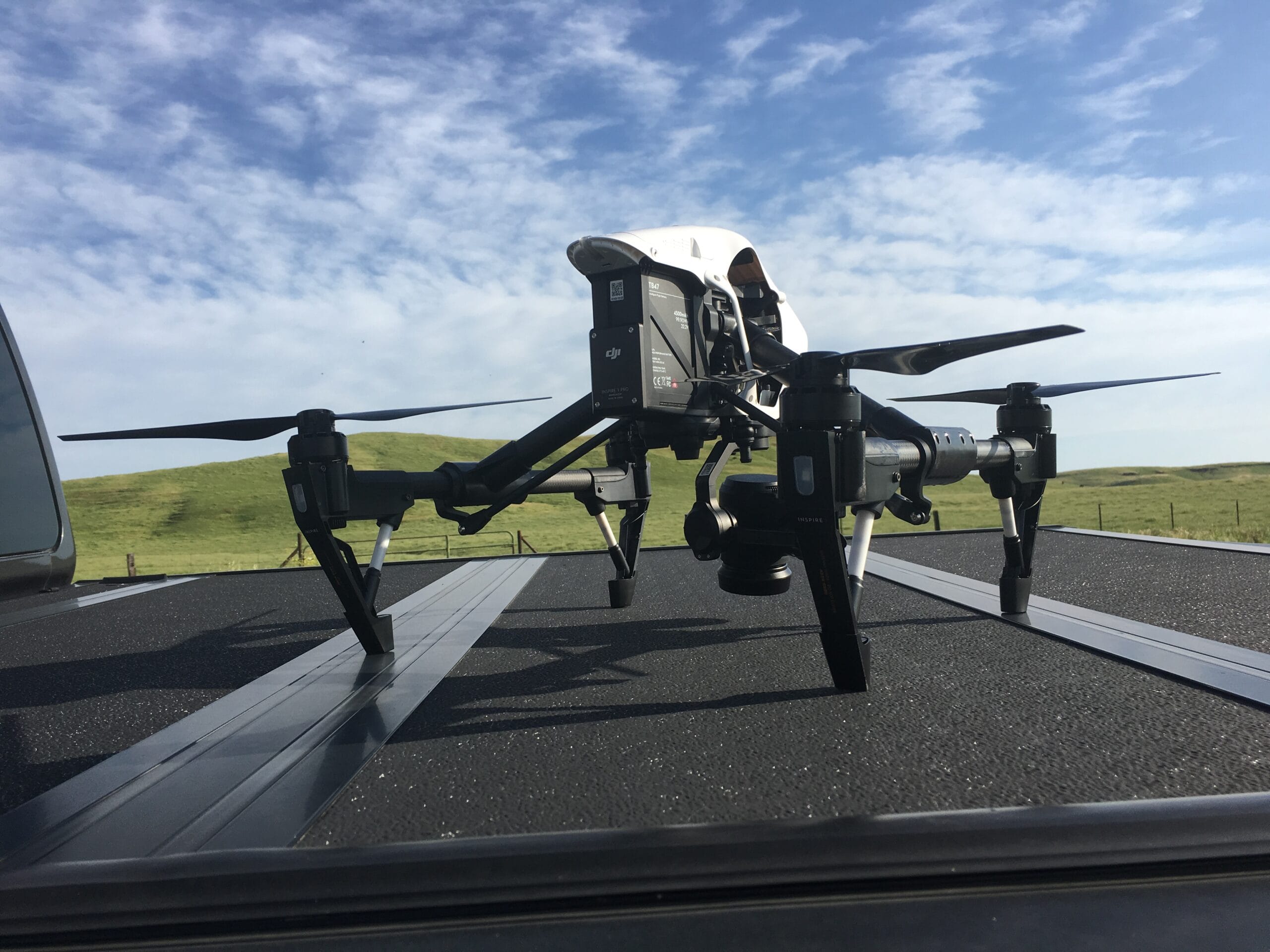
Beyond these established segments, there are emerging areas worth watching. Drone photography continues to expand beyond real estate into construction documentation, agricultural surveying, event coverage, and more. The investment in a quality drone and the training to operate it professionally can open doors to clients and projects that didn’t exist a decade ago.
360-degree content for virtual reality applications is another frontier. As VR technology becomes more mainstream, the demand for immersive photographic content is growing. This is still a relatively uncrowded space, which means early movers have an opportunity to establish themselves as specialists.
The Challenges You Need to Understand
I’ve painted a picture of opportunity, and that opportunity is real. But it would be dishonest not to acknowledge the challenges that come with starting a photography business in 2026. Understanding these challenges is the first step to overcoming them.
The Smartphone in Everyone’s Pocket
Here’s a staggering statistic: 92.5% of all images captured today are taken on smartphones. That’s not a typo. The vast majority of photographs being made right now are coming from the devices people carry everywhere.
This has compressed pricing for basic photoshoots and dramatically reduced demand for commodity-type photography. The family that might have hired a photographer for casual snapshots twenty years ago can now take perfectly acceptable photos themselves. The small business that needed someone to photograph their storefront might just use their iPhone.
But here’s the truth that gets lost in the doom-and-gloom narrative: smartphones democratized photography, and that’s real and legitimate. What they cannot replace is expertise, specialized equipment, and artistic vision. The photographers struggling right now are the ones who can only offer something that a smartphone can do. The photographers thriving are the ones who offer what smartphones can’t.
When a bride needs her wedding captured in varying lighting conditions throughout a sixteen-hour day, a smartphone won’t cut it. When a restaurant needs images that make their food look irresistible, they need a photographer who understands food styling and lighting. When a real estate agent wants twilight shots that make a property stand out, they need someone who knows how to work with challenging light.
Your job as a professional photographer isn’t to compete with smartphones—it’s to deliver results that smartphones simply cannot achieve.
AI’s Real Impact
AI is definitely affecting photography, and there’s no point pretending otherwise. In certain applications—product shots that need to be placed in various environments, fashion campaigns using synthetic models, stock photography, and generic advertising—AI can produce results faster and cheaper than traditional photography.
But there are critical distinctions to understand. AI creates synthetic images. Professionals capture reality. And there’s a massive category of photography where capturing reality is the entire point.
AI can’t photograph a chef’s signature dish. It can’t capture your actual wedding day. It can’t shoot the interior of a real home for sale. It can’t document a corporate event as it unfolds. It can’t take a portrait that captures someone’s genuine personality.
For weddings, events, portrait sessions, documentary work, real estate, and food photography, AI isn’t a competitor—it’s simply not playing in the same space. The market for authentic, real-world photography isn’t going away. It’s actually clarifying what professional photographers uniquely offer.
Lower Barriers Mean More Competition
The barrier to entry for photography has never been lower. Quality cameras have become more affordable. Online tutorials can teach technical skills. Social media provides free marketing platforms. All of this means more people are starting photography businesses than ever before.
Many of these amateur photographers price themselves extremely low, either because they’re treating it as a hobby or because they don’t understand the full cost of running a business. This can make it challenging to stand out, especially when potential clients are comparison shopping primarily on price.
This is exactly the area where I failed in my own career. I never made photography my main focus. I never marketed consistently. I never built the network that would make me the photographer people thought of first. Don’t make the same mistake I made.
The Income Reality
Let’s talk numbers honestly. The median annual income for professional photographers is around $33,000. That doesn’t sound like much, and for many people it isn’t a livable wage depending on where they live and what their expenses look like.
But context matters here. That median figure includes the roughly 75% of photographers who work part-time or treat photography as a part-time endeavor. They’re doing weekend weddings while holding down other jobs, or shooting real estate on evenings as a side income.
For someone who takes the business seriously and commits to full-time work, there’s significant upside available. Wedding photographers who build strong businesses average between $40,000 and $100,000 or more annually. Commercial photographers range from $50,000 to $120,000 or higher. The variation comes down to niche, location, skill level, and—critically—how seriously you approach the business side of photography.
What Will Make You Succeed in 2026
Diversification Is Key
I firmly believe that diversification will be essential for most photographers going forward, especially those coming from industries currently being disrupted by AI or economic changes.
Most photographers market themselves as one specific type: the wedding photographer whose website shows only weddings and engagements, or the real estate photographer who lists no other services. While that specialization helps people understand your expertise, it creates significant vulnerability. If your industry gets disrupted—whether by a housing market crash, an AI breakthrough, or an economic downturn—you’re essentially starting from zero because nobody associates you with anything else.
The photographers I’ve seen navigate challenges most successfully are those who maintain a specialty while also demonstrating capability in adjacent areas. Maybe you’re known primarily for weddings, but your website also showcases corporate events and portrait work. Maybe real estate is your bread and butter, but you also offer product photography for local businesses.
That said, specialization still has value. Photographers with deep expertise in a specific niche often command premium pricing and face less direct competition precisely because they’re known as the go-to person for that type of work. The sweet spot is having a recognized specialty while maintaining awareness of your broader capabilities.
Operating Like a Business, Not a Hobby
This might be the most important factor distinguishing photographers who succeed from those who struggle. Too many photographers treat their work as a hobby that occasionally generates income rather than a business that requires the same discipline as any other enterprise.
Running a photography business means understanding your costs, pricing your work profitably, managing cash flow, investing in marketing, building systems for client management, and consistently working on business development even when you’re busy with shoots.
It means tracking your numbers—knowing your cost per shoot, your profit margins, your customer acquisition cost, your average client lifetime value. These aren’t sexy creative topics, but they’re what separate sustainable businesses from expensive hobbies.
Consistent Marketing and Networking
If I could go back and change one thing about my photography career, it would be this: I would have marketed consistently from day one and never stopped, regardless of how busy I was or what else demanded my attention.
The biggest mistake I see photographers make is marketing only when they need clients. They hustle hard when bookings are low, then disappear from view once they get busy. That creates a feast-or-famine cycle that’s stressful and ultimately unsustainable.
Consistent marketing means always being visible to your potential clients. It means maintaining your social media presence even during busy seasons. It means regularly reaching out to past clients and potential referral partners. It means building relationships with venues, planners, real estate agents, or whoever refers work in your niche.
Your goal is to become the photographer people think of. That doesn’t happen from occasional marketing bursts. It happens from consistent presence over time.
Should You Start a Photography Business in 2026?
After everything I’ve shared—the market data, the growth segments, the challenges, the success factors—let me give you my honest assessment of whether starting a photography business makes sense right now.
Yes, start a photography business if: you have specialized skills or a specific niche you can begin marketing to immediately. If you’re already skilled at a type of photography that’s in demand—whether that’s real estate, weddings, products, or something else—you have a foundation to build on.
Yes, if you can commit to consistent marketing and networking. Not occasional bursts when you need work, but ongoing, disciplined business development as a non-negotiable part of your routine.
Yes, if you’re willing to operate like a business, not a hobby. That means tracking numbers, understanding profitability, managing cash flow, and making decisions based on business logic rather than just creative preference.
Yes, if you understand it can start as a side hustle and grow from there. You don’t have to quit your job tomorrow. You can build deliberately while maintaining financial stability.
Yes, if you’re targeting growing segments. Real estate, e-commerce, events, weddings—these are areas with demonstrated demand and growth trajectories.
Don’t start a photography business if you only want to do commodity work that anyone else—or AI—could do just as well. If you’re not offering something beyond what a smartphone can deliver, you’ll struggle to find clients willing to pay professional rates.
Don’t start if you won’t invest in building the business. That means investing time in marketing, money in equipment and education, and energy in relationship building. Photography businesses don’t build themselves.
Don’t start if you’re not willing to adapt as the market changes. The photography industry I started in 26 years ago looks nothing like it does today. The photographers who survived learned to evolve. The ones who didn’t are no longer in business.
And definitely don’t start if you’re expecting overnight success. Building a sustainable photography business takes time, patience, and persistence. Anyone promising you quick riches is selling something other than reality.
The Side Hustle to Full-Time Path
Here’s the beauty of professional photography: it naturally lends itself to starting as a side hustle that can grow into a full-time business. You don’t have to take the leap all at once.
Many successful photographers I know started exactly this way. They kept their day jobs while building their photography business on evenings and weekends. They used that stability to invest in equipment, build their portfolio, and develop their client base without the pressure of immediately needing to replace their full-time income.
The key is starting as a side hustle while marketing yourself with full-time intentions. Present yourself professionally. Build systems that can scale. Create a brand that looks like a real business, not a hobby with a camera.
Here’s the sequence I’d recommend for building a photography business the right way:
Start while you’re still employed elsewhere. Use that financial stability to your advantage. Build your niche experience by taking on projects that develop your specialty, even if some of them are low-paying or even free at first. Market consistently—not just when you need clients, but as an ongoing discipline. Grow your network and become the photographer people think of when they need someone in your niche.
Diversify your offerings so you’re not dependent on any single type of work. Track your numbers religiously so you know exactly what it will take to go full-time. And then, when your photography income can support the transition, make the move.
The Bigger Picture: Transformation, Not Death
The market is transforming right now. AI is taking over commodity work—the generic images, the stock photography, the simple product placements. And honestly? Let it. That’s not where the future of professional photography lies anyway.
What’s left for professional photographers is the authentic, human, real-world photography that AI cannot replicate. The wedding day that only happens once. The restaurant’s signature dish that exists nowhere else. The corporate event unfolding in real time. The portrait that captures a real person’s genuine personality.
That market—the market for authentic imagery—is growing. It’s $55 billion and climbing. And the photographers who position themselves in that space, who develop skills that smartphones and AI can’t match, who build businesses rather than hobbies… those photographers will thrive.
The photography industry has been through transformations before. I lived through the shift from film to digital. I watched photographers who refused to adapt disappear, while those who embraced the change found new opportunities. What we’re experiencing now with AI and smartphones is similar—a major transition that will reshape the industry but won’t end it.
The question isn’t whether there’s opportunity in photography. There absolutely is. The question is whether you’ll take it seriously enough to succeed.
Taking the Next Step
Look, I made mistakes along the way. I wish I’d taken my photography business more seriously from the beginning. I wish I’d marketed consistently instead of letting it play second fiddle to everything else I was doing. There were times I thought my skills alone would carry me, but technical ability doesn’t automatically translate into people thinking of you as their photographer of choice.
That’s why I created a free course called Starting a Photography Side Hustle. It’s designed to give you exactly what I wish someone had told me 26 years ago.
The course covers choosing your niche—finding the specialty that matches your skills and has market demand. It walks through setting up your business properly from day one. It covers pricing your work profitably (not just competitively). It includes marketing strategies that actually work for photographers. It teaches you how to build a client base systematically. And it shows you how to grow from side hustle to full-time when you’re ready.
It’s completely free, and it represents everything I’ve learned from 26 years in this industry—the successes and the failures, the things that worked and the mistakes I wish I’d avoided.
The photography industry isn’t dying. It’s going through a transformation similar to what happened when film gave way to digital. Some photographers will resist the change and fade away. Others will understand what’s happening, adapt accordingly, and build thriving businesses.
Which group you’re in is entirely up to you.
Start the free course: How To Start A Photography Side Hustle Business
Get the course free using the code: startaphotobiz
Growing a photography business can be lonely at times. If you found this helpful, I’d encourage you to subscribe to my newsletter where I share regular insights from my ongoing work as a photographer. We’re all figuring this out together, and there’s value in having a community around you as you build.
Thanks for reading. I hope to see you in the course.