GoPro Mission 1 and Mission 1 Pro: Everything We Know About GoPro’s Bold New Direction for 2026
By Jerad Hill | Jerad Hill Photo | Updated April 2026
This article is based on information provided in GoPro’s official press materials and pre-launch briefing. I have not yet handled or tested the Mission cameras. Hands-on review coverage will follow once the cameras are available for purchase.
Quick Summary: What GoPro Just Announced
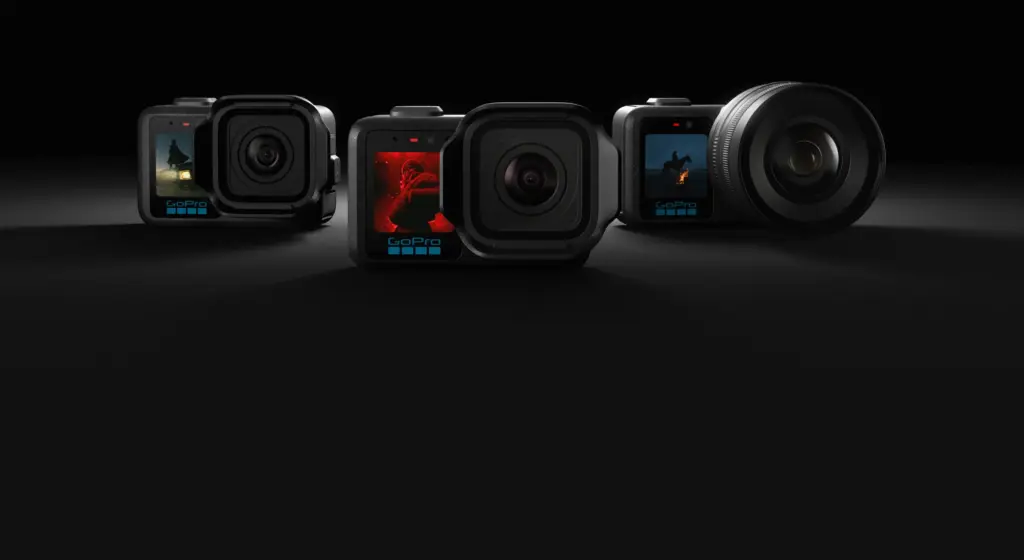
GoPro has officially ended the Hero series and launched an entirely new product line called the Mission series. Built around a 1-inch sensor, the GP3 processor, and a redesigned interface, these cameras represent the most significant reinvention in GoPro’s history. Three cameras make up the lineup: the Mission 1 Pro (available first), followed by the Mission 1 and the Mission 1 ILS later in 2026.
This is not an incremental update. GoPro is walking away from the action-camera-first positioning that defined the Hero line and pivoting toward general photography, vlogging, filmmaking, and premium content creation — while still maintaining rugged, weather-sealed construction. In short: GoPro finally made the camera photographers have been asking for.
- 1-inch sensor across the entire Mission lineup
- 8K at 60fps, 4K at 240fps, 1080p at 960fps burst mode
- 240 Mbps bitrate (300 Mbps with Labs firmware)
- GP Log 2 for cinematic dynamic range
- Mission 1 Pro: fixed lens, 20m waterproof, action-ready
- Mission 1 ILS: interchangeable Micro 4/3 lens mount
- 5 hours at 1080p, 3.5 hours at 4K/30 (with new Enduro 2 battery; backward compatible with previous Enduro)
- Proprietary wireless mic system with 32-bit float recording
- Most modes record continuously with no thermal shutdown
Product Links
- GoPro MISSION 1 PRO ILS: https://jerad.link/gopromission1proils
- GoPro MISSION 1 PRO: https://jerad.link/gopromission1pro
- GoPro MISSION 1: https://jerad.link/gopromission1
Why This Announcement Matters: Context From a Working Photographer
I have been covering cameras professionally for over two decades — shooting weddings, sports, live events, and commercial work with gear that has to perform under real-world pressure. I have watched GoPro struggle for years to find its footing as DJI systematically ate into its market share with the Osmo Action series, and as Insta360 redefined what a small-format camera could do with features like larger sensors and 360-degree capture.
GoPro’s response for much of the past five years has felt reactive: small iterative updates to the Hero line, minor sensor upgrades, price adjustments. Each release felt like a company trying to protect margin rather than recapture leadership. The Hero 13 was a good camera. But it was not a bold one.
The Mission series is different. This is a genuine strategic pivot — one that required GoPro to essentially abandon the form factor and product philosophy that made it famous. That takes courage, especially for a company that has weathered multiple rounds of layoffs and operates in an increasingly hostile consumer electronics environment. Whether it pays off commercially remains to be seen. But as a photographer who has wished for years that GoPro would make a camera like this, I can say without hesitation: they built the right thing.
I will be ordering the Mission 1 Pro and the Mission 1 ILS as soon as they are available for public purchase and putting them through the same 30-to-90-day real-world testing process I use for every camera review. I will be testing these on actual paid client shoots — not in a controlled lab. That is how you find out what a camera actually does.
The GoPro Mission Series: Three Cameras, One Platform
All three Mission cameras share the same foundation: the 1-inch sensor, the GP3 processor, and the same core body design. Think of them as variations on a single platform rather than entirely different products. The key distinctions are in lens configuration, intended use case, and release timing.
GoPro Mission 1 Pro — The Action-Ready Flagship
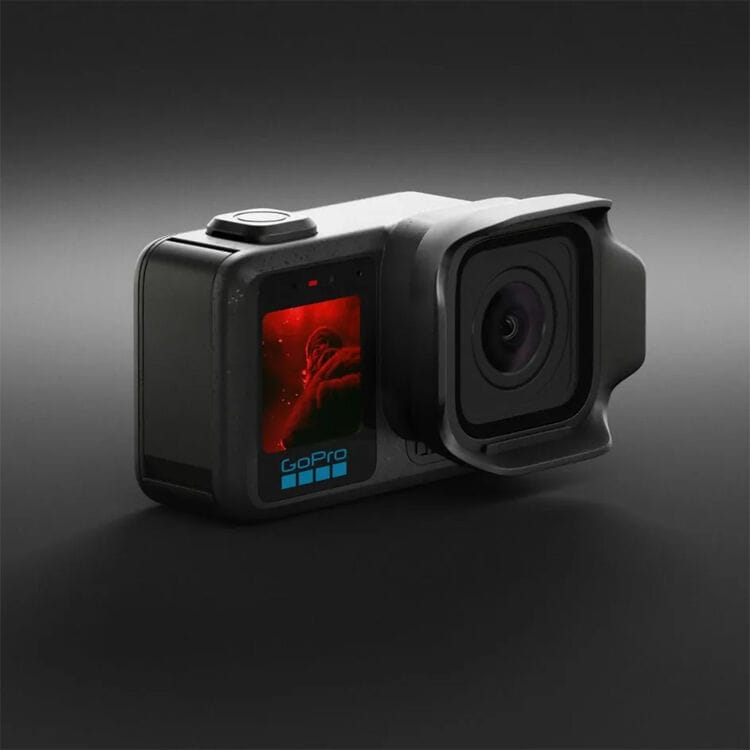
The Mission 1 Pro is the first to ship and is positioned as the spiritual successor to the Hero series for people who want the best possible image quality in a rugged, action-capable package. It features a fixed lens with a removable, changeable lens cover — meaning you can swap in ND filters the same way you did on the Hero line, which is a thoughtful continuity for existing GoPro users.
Because the 1-inch sensor requires a physically larger lens, the Mission 1 Pro is bigger and heavier than the Hero 13. That is an inevitable tradeoff and one GoPro seems to have accepted. The multi-mount system from the Hero series carries over: you still get the fold-out fingers, magnetic clip capability, and quarter-inch screw mount. If you have a library of GoPro mounts and accessories, much of it should remain compatible.
The Mission 1 Pro is rated to 20 meters waterproof without any housing. GoPro says it can survive deeper than that — the 20-meter limit exists because water pressure at greater depth can depress the physical buttons, potentially triggering unintended recording starts and stops. That is a transparent and honest explanation for a spec that might otherwise seem like an arbitrary cutoff.
For vloggers who have migrated to the DJI Osmo Action 5 or Action 6 because they wanted something that could handle weather, the Mission 1 Pro is going to be very compelling — particularly if GoPro’s low-light performance claims hold up in real-world testing.
GoPro Mission 1 — The Baseline Model
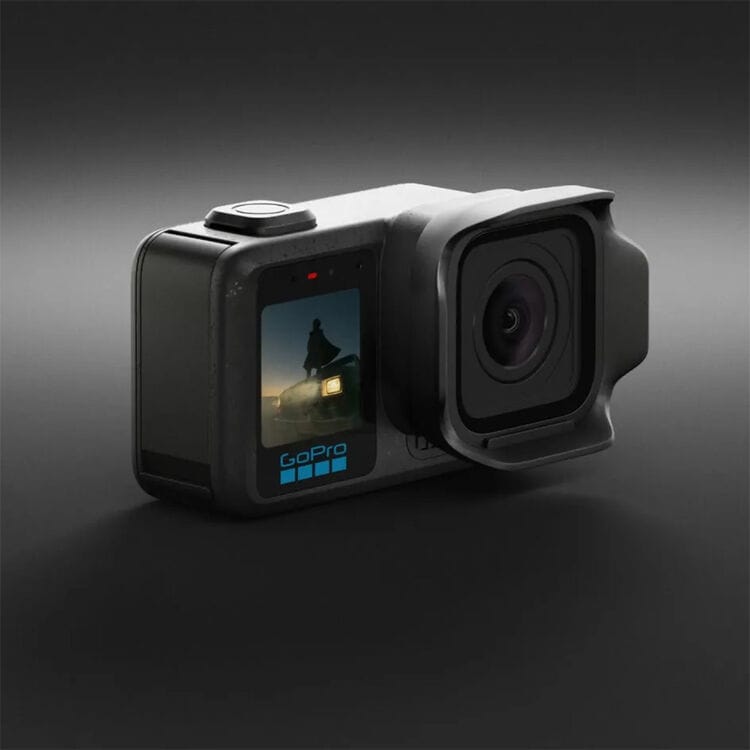
The Mission 1 shares the same sensor, processor, and body design as the Pro. Details on its specific differentiators from the Mission 1 Pro have not been fully disclosed at launch. Based on the briefing, it appears to be the more accessible entry point into the Mission ecosystem — likely at a lower price point with some feature or build quality distinctions. Full specs will be clearer when GoPro makes it available later in 2026.
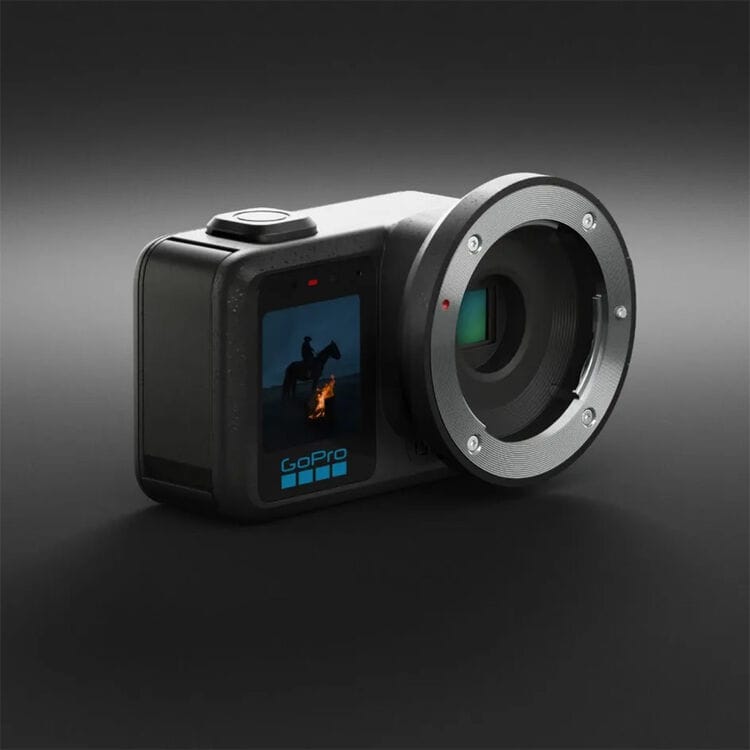
GoPro Mission 1 ILS — The Interchangeable Lens Model
The Mission 1 ILS is the camera that has generated the most excitement in filmmaking and professional photography circles. ILS stands for Interchangeable Lens System, and it uses the Micro 4/3 lens mount — one of the most well-supported mirrorless mount systems in the world. This means it can use lenses from Olympus, Panasonic, Leica, Voigtlander, and dozens of third-party manufacturers, many of which are available for relatively modest cost.
The 2.7x crop factor from the 1-inch sensor is significant. A standard 25mm Micro 4/3 lens becomes the equivalent of approximately a 67mm perspective on this camera — leaning toward portrait and telephoto territory. If you want ultra-wide coverage, you will be looking at dedicated ultra-wide Micro 4/3 lenses or fisheye options from manufacturers like Laowa. That is worth factoring into your lens planning.
The Mission 1 ILS does not have autofocus. This will be a dealbreaker for some users and a non-issue for others. If you are doing narrative filmmaking or cinematic work, manual focus is often preferred anyway. The quality of the focus assist tools will matter a great deal here, and that is one of the first things I will evaluate when I get the camera in hand. GoPro has acknowledged this is a first-generation limitation and has implied that autofocus may come in a future Mission 2 iteration.
The ILS is not waterproof without a housing. Swapping to an interchangeable lens system makes a fully sealed body essentially impossible without a housing, which is the standard tradeoff in the mirrorless world. If you need waterproofing and interchangeable lenses, you will need to factor housing costs into your budget.
For professional film productions — particularly those needing a stunt camera or crash camera that can take physical risks you would never take with a RED or Sony Venice — the Mission 1 ILS is genuinely interesting. At the price point GoPro cameras typically occupy, it becomes effectively budget-line spending for a feature film, while offering 8K capture, GP Log 2, and high bitrate recording.
GoPro Mission Series Technical Specifications
Sensor and Image Quality
The 1-inch sensor is the headline. This is the same sensor format used in cameras like the Sony RX100 series and the Sony RX10 IV — compact but capable, with meaningfully better low-light performance and dynamic range than the smaller sensors in the Hero line. GoPro’s promotional footage showed natural, cinematic dynamic range from GP Log 2, which is a significant improvement over the flatter, more limited look of earlier GoPro log profiles.
The 8K resolution at 60 frames per second is impressive. Most full-frame mirrorless cameras top out at 8K/30fps. 4K at 240fps makes this a legitimate slow-motion tool for sports, action, and creative work. The 1080p/960fps burst mode is more of a creative novelty, but it is a capable one.
Recording and Bitrate
The standard high-quality recording mode tops out at 240 megabits per second — double what DJI and Insta360 offer at their highest settings. For color grading, detail retention, and professional post-production workflows, this matters. With Labs firmware enabled, you can push to 300 Mbps.
GP Log 2 is the format to use for any serious color work. Based on what GoPro has shown in promotional footage, the improved processor and larger sensor appear to deliver genuinely cinematic results — not just good-for-a-GoPro results.
Battery Life and Thermal Performance
GoPro is claiming 5 hours of continuous recording at 1080p and 3.5 hours at 4K/30fps. These figures are based on the new Enduro 2 battery, which ships with the Mission cameras. The good news for existing GoPro users: the Mission cameras are backward compatible with the previous Enduro battery of the same form factor, so your existing spares will work — just with reduced runtime relative to the Enduro 2 specs.
Those are substantial claims. For context, most action cameras in this class struggle to hit 90 minutes of 4K recording before battery or heat becomes a factor. Whether the 5-hour 1080p and 3.5-hour 4K figures hold in real-world conditions — especially in warm environments and under sustained load — is exactly the kind of thing I will test thoroughly.
More notable is GoPro’s claim that most recording modes will run continuously without thermal shutdown, even without active cooling airflow. Thermal throttling and shutdown have been persistent criticisms of action cameras across all brands. If this claim holds, it represents a major engineering achievement. If it does not, it will be a major credibility problem. I will find out.
Interface and Usability
The camera interface has been completely redesigned from the Hero series. GoPro describes it as easier to use and more responsive. Given that the Hero interface was already reasonably intuitive, expectations are high. The good news for power users: Labs firmware support is confirmed, bringing advanced controls for those who want granular access to camera parameters — something GoPro users have come to rely on and that sets GoPro apart from competitors.
Audio
GoPro is launching a proprietary wireless microphone system alongside the Mission cameras with 32-bit float recording. This is a meaningful commitment to the vlogging and content creator use case. 32-bit float recording eliminates clipping issues, making audio recovery in post-production far more forgiving. This is a feature typically found in dedicated audio recorders from companies like Rode and Zoom, not in camera-bundled mic systems.
Why the GoPro Mission Series Is a Turning Point
GoPro Finally Built the Camera Photographers Asked For
For years, the photography community has asked GoPro for a camera with a larger sensor, better low-light performance, and higher-quality image output. The Hero line delivered excellent action footage, but it was always limited by its small sensor and consumer-grade image processing. Every iteration felt like refinement of a known formula rather than a genuine leap forward.
The Mission series is that leap. A 1-inch sensor, proper log profile, 240 Mbps bitrate, and an interchangeable lens variant represents a fundamentally different product philosophy. This is GoPro competing with Sony’s ZV-1 series, the DJI Pocket 3, and even entry-level mirrorless cameras — not just Insta360 and the Osmo Action line.
Direct Response to DJI and Insta360
DJI has been eating into GoPro’s core market for several years. The Osmo Action series delivers competitive image quality, excellent stabilization, and a strong ecosystem at aggressive price points. The DJI Pocket 3 won over a large portion of the vlogging community with its gimbal-stabilized 1-inch sensor footage. Insta360 innovated in a different direction, offering 360-degree cameras and increasingly capable action cameras with larger sensors.
Rather than continuing to fight DJI head-to-head in the commodity action camera space, GoPro has made a strategic decision to step sideways — into a higher-value, more premium-positioned product category. The Mission 1 Pro is not trying to be the cheapest rugged action camera. It is trying to be the best image quality you can get in a rugged, mountable, action-capable body. That is a defensible position, and one where GoPro’s brand and engineering heritage can be an asset rather than a liability.
A Company Under Real Pressure Making a Real Bet
GoPro has gone through multiple rounds of layoffs over the past few years. The company is not operating from a position of strength. Transforming your entire product line when you are resource-constrained is an enormous risk. The fact that they did it anyway — and appear to have done it with genuine conviction rather than half-measures — says something about the leadership’s commitment to a long-term vision over short-term margin protection.
I genuinely want GoPro to succeed with this. Not just because I enjoy their cameras, but because the photography and content creation market is better when GoPro is competitive. Innovation from one company forces innovation from competitors. If the Mission series delivers on its promises, it will push DJI, Insta360, and Sony to respond with better products of their own. That is good for everyone.
Who Should Consider the GoPro Mission Series
Vloggers and Content Creators
The Mission 1 Pro is the most direct upgrade path for vloggers currently using the Hero series or the DJI Osmo Action line. The 1-inch sensor provides the improved low-light and dynamic range performance that content creators need for indoor and challenging lighting scenarios. The wireless mic with 32-bit float recording is a genuine upgrade over typical action camera audio. The rugged, weather-sealed body means you can keep filming in conditions where the gimbal-based DJI Pocket 3 becomes a liability.
Adventure and Outdoor Photographers
The Hero series built its reputation in this space, and the Mission 1 Pro maintains all the relevant credentials: deep waterproofing, durable construction, the established GoPro mount ecosystem, and now a much more capable sensor. Helmet mounting, handlebar mounting, surfboard mounting — all of the scenarios that defined GoPro’s original market are still fully supported.
Filmmakers and Cinematographers
The Mission 1 ILS is a genuinely interesting tool for narrative filmmakers, particularly for crash cam, stunt cam, and tight-space applications. The Micro 4/3 mount opens up a wide range of proven cinema lenses. GP Log 2, 240 Mbps bitrate, and 8K capture make the footage post-production friendly. The lack of autofocus is not a limitation for this use case — most cinema cameras require manual focus by design.
Who Should Wait
If autofocus is non-negotiable for your work, the Mission 1 ILS is not your camera at launch. If ultra-wide coverage is a primary need, you will need to invest in a specialty lens for the ILS or stick with the fixed-lens Mission 1 Pro. And as with any first-generation product from a new platform, early adopters should understand they are beta testing the software and firmware. I will have detailed real-world assessments of reliability and software maturity once I have put these cameras through extended testing.
Frequently Asked Questions About the GoPro Mission Series
Is the GoPro Hero series discontinued?
Based on the GoPro briefing and public announcement, it does appear that the Hero series has been discontinued with the Hero 13 as the final model. GoPro has indicated that the Mission series represents a new direction for the company, and there are currently no plans for a Hero 14. This is a significant strategic shift rather than a typical product cycle transition.
What sensor does the GoPro Mission series use?
All three cameras in the Mission lineup — the Mission 1 Pro, Mission 1, and Mission 1 ILS — use a 1-inch sensor. This is the same sensor format used in Sony’s RX100 and RX10 series, and it is a major upgrade over the smaller sensors used throughout the Hero line. The larger sensor enables better low-light performance, improved dynamic range, and a more cinematic image character.
Can the GoPro Mission 1 ILS use existing camera lenses?
The Mission 1 ILS uses the Micro 4/3 (MFT) lens mount, which is one of the most widely supported mirrorless formats available. Compatible lenses include offerings from Panasonic, Olympus, Leica (DG series), Sigma, Voigtlander, Laowa, and many other manufacturers. However, because the 1-inch sensor has a 2.7x crop factor, lens focal lengths will have different effective angles of view than on a standard Micro 4/3 body. A 12mm Micro 4/3 wide-angle lens becomes approximately equivalent to a 32mm perspective on the Mission 1 ILS.
Does the GoPro Mission 1 ILS have autofocus?
No. The Mission 1 ILS is manual focus only at launch. GoPro has acknowledged this limitation and indicated that autofocus may be addressed in future camera generations. For filmmakers accustomed to manual focus workflows, this is unlikely to be an obstacle. For run-and-gun vlogging or documentary work where continuous autofocus is important, this is a significant limitation to consider.
How waterproof is the GoPro Mission 1 Pro?
GoPro rates the Mission 1 Pro to 20 meters (approximately 66 feet) of depth without any additional housing. GoPro has stated that the camera can physically survive greater depths — the 20-meter limit is set because water pressure below that depth can depress the physical buttons, potentially causing unintended recording events. The Mission 1 ILS is not waterproof without a housing due to its open lens mount design.
What is GP Log 2 and why does it matter?
GP Log 2 is GoPro’s updated logarithmic recording profile for the Mission series. Shooting in log format captures a wider dynamic range by compressing highlights and shadows into a flat, low-contrast image that retains more information for post-production color grading. GP Log 2 is an evolution of GoPro’s original log profile, and based on early promotional footage, it produces a noticeably more cinematic and natural-looking image than earlier GoPro log formats. For any serious color work, this is the mode to use.
How does the Mission series compare to the DJI Pocket 3?
The DJI Pocket 3 uses a 1-inch sensor with a gimbal stabilization system, making it excellent for smooth handheld and vlogging footage in controlled conditions. The Mission 1 Pro uses electronic stabilization and is fully weather-sealed — meaning it is far more suitable for outdoor, adventure, and unpredictable shooting environments. The Mission 1 Pro should also offer a higher maximum bitrate and the GP Log 2 profile for professional color work. The DJI Pocket 3 remains a compelling choice for studio-style vlogging; the Mission 1 Pro is the stronger choice when conditions are challenging.
When will the GoPro Mission cameras be available?
The Mission 1 Pro is the first to ship in 2026. The Mission 1 and Mission 1 ILS will follow later in the year. Exact release dates and pricing have not been confirmed at the time of this article’s publication. I will update this article and post reviews on the Jerad Hill Photo YouTube channel as soon as review units and public availability become clear.
Is the Mission series good for action sports?
The Mission 1 Pro maintains the GoPro mount ecosystem and the deep waterproofing, making it physically suitable for most of the scenarios where the Hero series excelled. The larger sensor and heavier body do represent a tradeoff — it is larger and heavier than the Hero 13. For traditional helmet-mount, handlebar-mount, or chest-mount POV shooting, the Mission 1 Pro should work well, though users will want to evaluate the weight impact for their specific application. The Mission 1 ILS is less suited to action sports due to its lack of native waterproofing.
Does the GoPro Mission series support Labs firmware?
Yes. GoPro confirmed that all Mission cameras will support Labs firmware, which provides advanced control over camera parameters beyond what the standard interface offers. This is a meaningful feature for power users and cinematographers who want precise control over encoding settings, including the ability to push bitrate to 300 Mbps.
What is the slow-motion capability of the Mission series?
The Mission series records 4K at up to 240 frames per second and includes a burst mode at 1080p/960fps. This places it among the most capable slow-motion action cameras currently available. The combination of 4K/240fps with GP Log 2 and high bitrate recording gives serious slow-motion footage a production quality level that was not previously possible in a GoPro-style body.
What battery does the GoPro Mission series use, and are old batteries compatible?
The Mission cameras ship with the new Enduro 2 battery, which is the basis for all of GoPro’s published runtime figures: 5 hours at 1080p and 3.5 hours at 4K/30fps. The Mission series is backward compatible with the previous Enduro battery of the same form factor, so existing GoPro users can use their current spares without buying new batteries — though runtime will be lower than the Enduro 2 specs. If you are planning extended shooting sessions, picking up a few Enduro 2 batteries at launch is the smart move.
What I Will Be Testing: My Real-World Review Plan
I will be ordering the Mission 1 Pro and Mission 1 ILS as soon as they are available for purchase. My testing approach is the same one I use for every camera review: I put the gear through actual paid client work, not staged reviews or controlled lab tests. For cameras like these, that means:
- Outdoor event photography in variable weather and lighting
- Wedding and portrait work with the Mission 1 ILS using multiple Micro 4/3 lenses
- Extended continuous recording tests to validate the 5-hour battery claim
- Thermal performance testing in warm environments and under sustained load
- Low-light performance comparison against the DJI Osmo Action 6, DJI Pocket 3, and Hero 13
- Slow-motion footage evaluation at 4K/240fps and 1080p/960fps
- Labs firmware evaluation for advanced users
- Hands-on interface assessment and usability under pressure
I will also be testing the wireless microphone system and evaluating whether the 32-bit float recording claim holds up in noisy environments. Audio is consistently underrated in camera reviews, and it matters enormously for vloggers and content creators.
Preliminary Assessment: The Right Camera at the Right Time
Based on everything in the briefing and announcement, GoPro has built something genuinely interesting. The specs are compelling, the product philosophy shift is the right one, and the Mission 1 ILS in particular represents a camera that has no direct equivalent in the market right now — a rugged, compact, high-bitrate interchangeable lens camera in a mountable action camera body.
The risks are real. First-generation software on a new processor platform always carries uncertainty. The lack of autofocus on the ILS limits its audience. The economy is challenging, and these are likely to be premium-priced cameras. GoPro’s financial situation adds a layer of concern about long-term support and future firmware development.
But if GoPro executes well on the launch and delivers on its thermal, battery, and image quality promises, the Mission series has the potential to genuinely reinvigorate the brand and carve out a premium position that DJI and Insta360 are not currently occupying. I am optimistic. And I will have honest, detailed answers for you once these cameras are in my hands on a real shoot.
Stay Updated: Subscribe for My Full Mission Series Reviews
I will be ordering both the Mission 1 Pro and Mission 1 ILS as soon as they are available to the public. My full reviews will be published on the Jerad Hill Photo YouTube channel and in my Substack newsletter — both of which are free to follow.
On YouTube, I publish in-depth camera reviews based on extended real-world testing. Not unboxings, not spec recitations — reviews built from weeks or months of actual use on paid client shoots. Subscribe so you do not miss the Mission series reviews:
Subscribe to Jerad Hill Photo on YouTube
On Substack, I publish longer-form photography and gear commentary, early access to review findings, and behind-the-scenes content from my testing process. It is also where I share thoughts that do not always fit the YouTube format:
Subscribe to the Jerad Hill Photo Substack Newsletter
If you have specific questions about the Mission series you want me to answer in my review — lenses, use cases, comparisons — drop them in the comments on YouTube or reply to any Substack post. I read everything, and the best questions shape what I focus on in testing.